


Sample Development for Leggings Buyers
Tervoniq develops leggings samples for activewear brands, apparel wholesalers, importers, distributors and private-label buyers. Sampling turns design requirements into a measurable garment that can be reviewed before a bulk order is released.
Development can begin from a tech pack, measurement chart, drawing, reference garment, product photograph or one of our existing styles. The sample route depends on how much needs to change. An available sample is suitable for checking general fabric and workmanship, while an OEM or private-label sample is required when fit, construction, color, branding or packaging must follow buyer specifications.
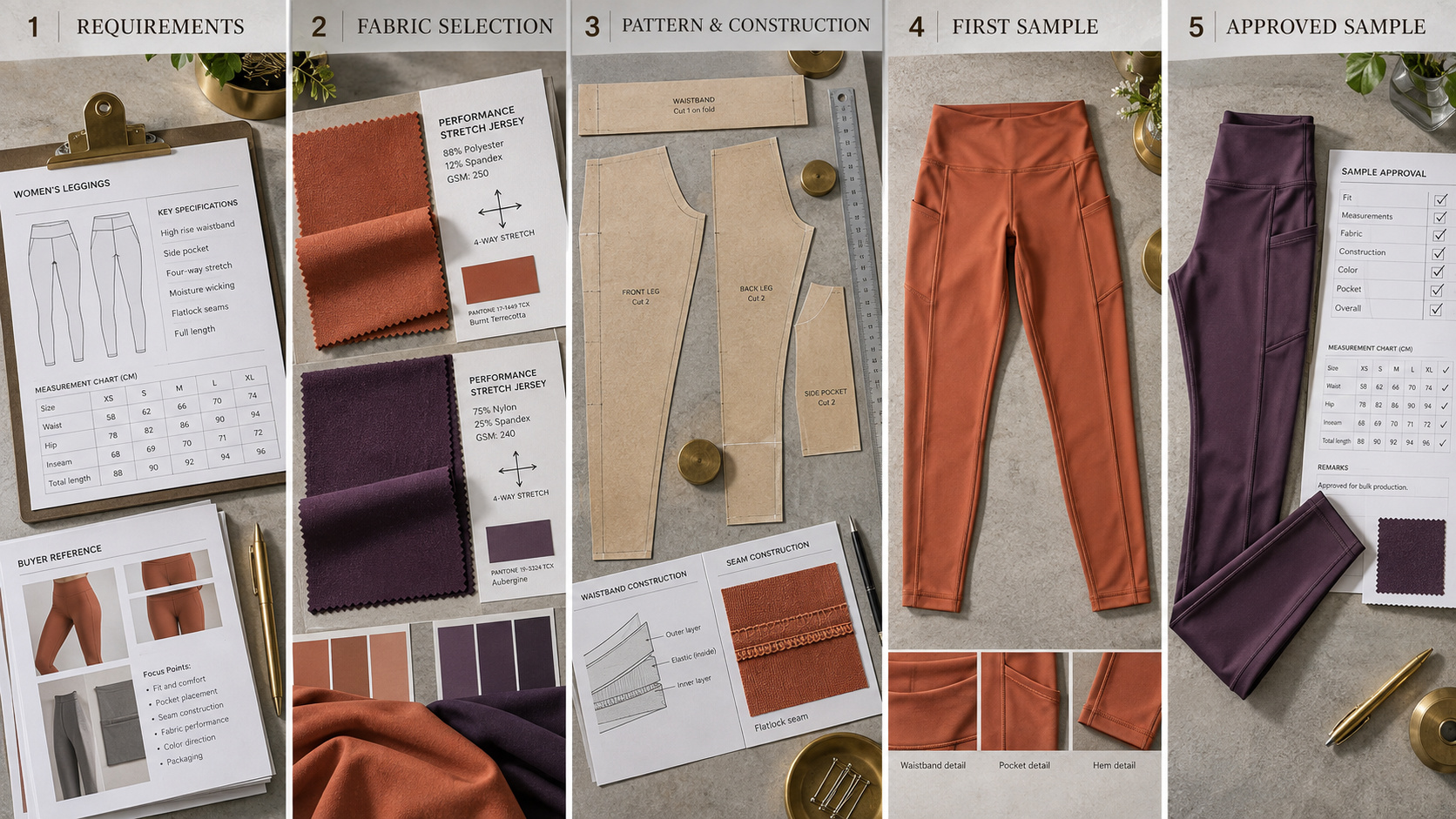 Information Required Before Sampling
Clear development information reduces revisions and helps us assess material availability, sample cost and timing. Buyers should provide the intended leggings type, target market, size range, fabric preference, color, waistband construction, pocket details and expected order quantity.
A complete tech pack is useful but not mandatory. We can also review sketches, photographs, measurement charts or a physical reference sample. For specification-based development, the main points normally include:
- Fabric composition, GSM, stretch, recovery and required opacity
- Waist, hip, rise, inseam and waistband measurements
- Pocket position, gusset, seam type and construction details
- Pantone colors or approved physical color references
- Logo artwork, dimensions, placement, labels and packaging
- Estimated quantity by style and color
Buyers who have not finalized the fabric can compare suitable options through our Fabric & Material Selection process before confirming the sample.
From Specification to the First Sample
The first stage is a feasibility review. We check whether the selected fabric, construction, measurements and branding method are compatible. Details such as very high compression, deep side pockets, bonded elements, special surface finishes or custom-dyed fabric can affect the development route.
After the main specifications are confirmed, fabric and trims are prepared, patterns are adjusted, and the sample is cut and sewn. Modified or private-label samples are typically completed in approximately 7–12 days. Deeper custom developments may require around 10–15 days, depending on fabric sourcing, pattern work, construction and branding requirements.
These timeframes begin after the necessary specifications and available materials have been confirmed.
What Buyers Should Check on the Sample
Sample approval should cover more than appearance. The garment needs to be evaluated against the intended use and agreed specifications.
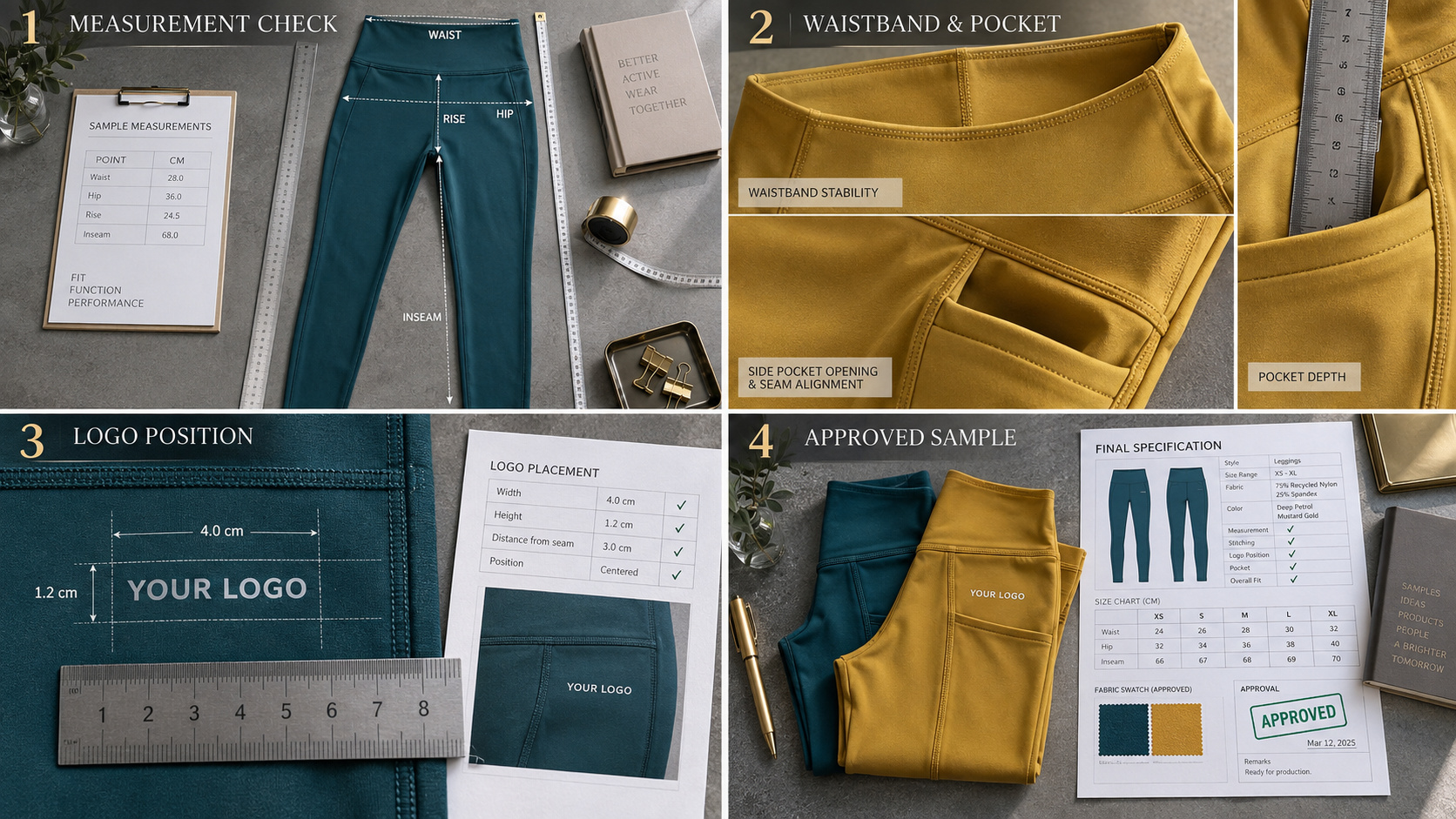
Important checks include garment measurements, waistband height and stability, rise, inseam, pocket dimensions, seam formation, stretch, recovery and fit. For sports leggings, opacity or squat-proof performance should be checked where applicable. Maternity styles require particular attention to belly-panel construction and stretch allowance, while fleece-lined and PU styles need material-specific fit and surface checks.
Logo dimensions and position should be measured rather than approved only by sight. Main labels, care labels, size labels, hangtags and barcode details should also be reviewed if they are part of the program. The relevant application methods are explained on our Logo & Label Customization page.
 Revisions and Pre-Production Approval
If a sample requires changes, feedback should identify the exact measurement, material, construction or appearance issue. Marked photographs, an updated measurement chart or annotated specification sheet are more useful than general comments such as “make it tighter” or “adjust the fit.”
Before bulk production, we recommend approving the fabric, measurements, color, construction, logo placement, labels and packing details. The approved sample and final specification then become the references for cutting, sewing and inspection.
Color and measurement requirements can be finalized through Color & Size Customization. Packaging samples or packing specifications can be handled separately through Custom Packaging Solutions.
Sample Cost, MOQ and Bulk-Order Planning
Sample cost depends on fabric availability, pattern development, construction complexity, logo method and the number of revisions required. Courier charges and any special material or branding setup are reviewed before sampling begins.
Selected existing programs typically start around 300–500 pieces per style and color. Private-label or customized programs commonly begin around 500–1,000 pieces, while custom dyeing or special fabrics may require higher quantities.
For an accurate sample assessment, send your style reference or tech pack, required size, fabric preference, color, logo details, packaging needs, estimated bulk quantity and destination country.