


 Cut-and-Sew Leggings Manufacturing in China
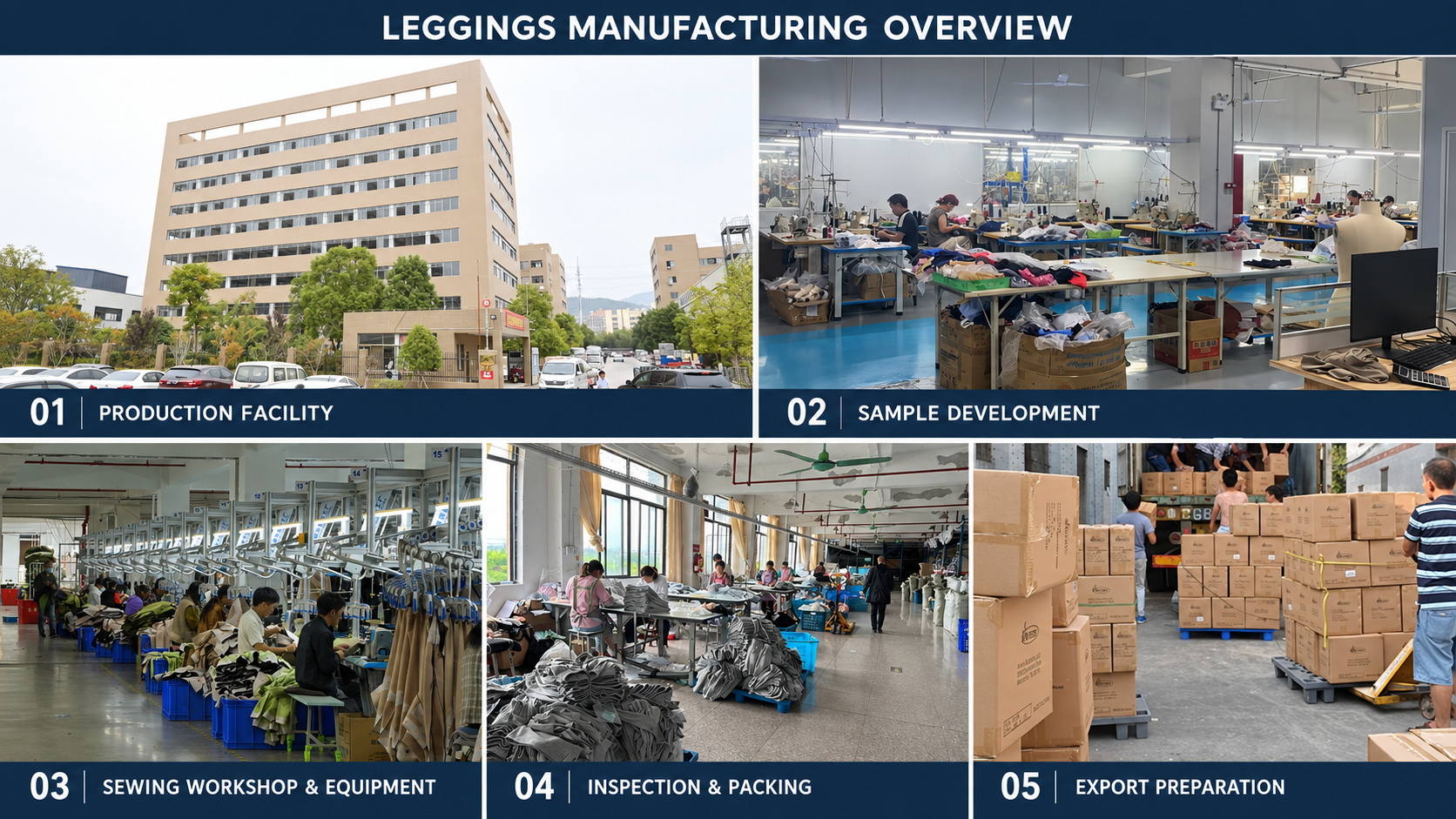
Tervoniq manufactures cut-and-sew leggings in Dongyang, Zhejiang, China, for importers, activewear brands, apparel wholesalers, distributors, retail chains and private-label buyers. Our production scope covers sports leggings, pocket leggings, biker shorts, maternity leggings, fleece-lined styles, PU and faux leather leggings, and other stretch-fabric programs.
Approximately 8,750 m² supports fabric inspection, cutting, sewing, finishing, inspection, packing and warehousing. Five main cut-and-sew lines handle core programs, supported by around 120–150 sewing and auxiliary machines. Typical monthly capacity is approximately 100,000–140,000 pieces, depending on fabric availability, garment construction, branding processes and the production mix.
The manufacturing route is established from the approved sample, size chart, construction details, material specification and packing requirements. These references allow production and inspection teams to work from measurable standards instead of general descriptions.
Production Preparation and Approved Specifications
Before cutting begins, the merchandising and production teams confirm the style, quantity by color and size, approved fabric, measurement chart, tolerances, seam construction, waistband, pockets, gusset, branding and packaging.
OEM development may start from a tech pack, drawing, physical reference garment, specification sheet or modified existing style. The approved sample is retained for comparison during production. Any unresolved point—such as fabric shade, logo position, pocket depth or carton quantity—should be confirmed before the production specification is released.
Custom-dyed fabrics, special surface materials and complex garment structures may require additional preparation. Buyers can review the complete sequence on our Leggings Production Process page.
Fabric Inspection, Spreading and Cutting
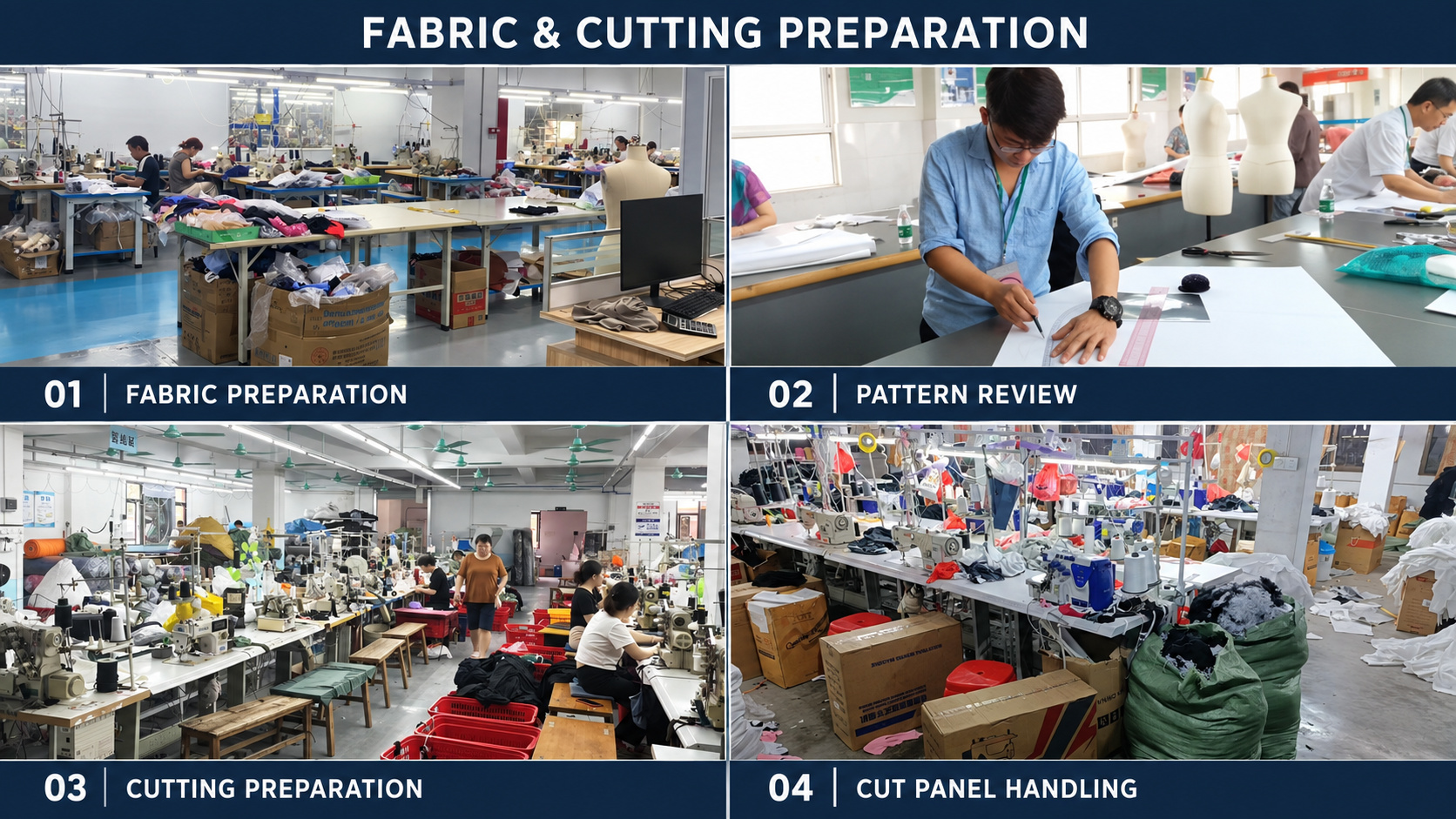
Incoming fabric is checked for visible defects, width, shade consistency and applicable specification details. For stretch leggings, fabric composition, GSM, hand feel, stretch, recovery and opacity may influence both cutting and finished-garment performance.
Fabric shade lots should be identified and controlled before panels are cut. Pattern pieces are arranged according to the approved size range and garment construction, with attention to fabric direction and stretch orientation. Cut components are checked against the pattern, size chart and production specification before being bundled for sewing.
Accurate cutting is especially important around waistbands, gussets, curved seams and pocket panels. Small deviations at this stage can lead to inconsistent fit or mismatched components during assembly. More detail is provided on the Fabric Inspection & Cutting page.
 Stretch-Garment Sewing and Construction
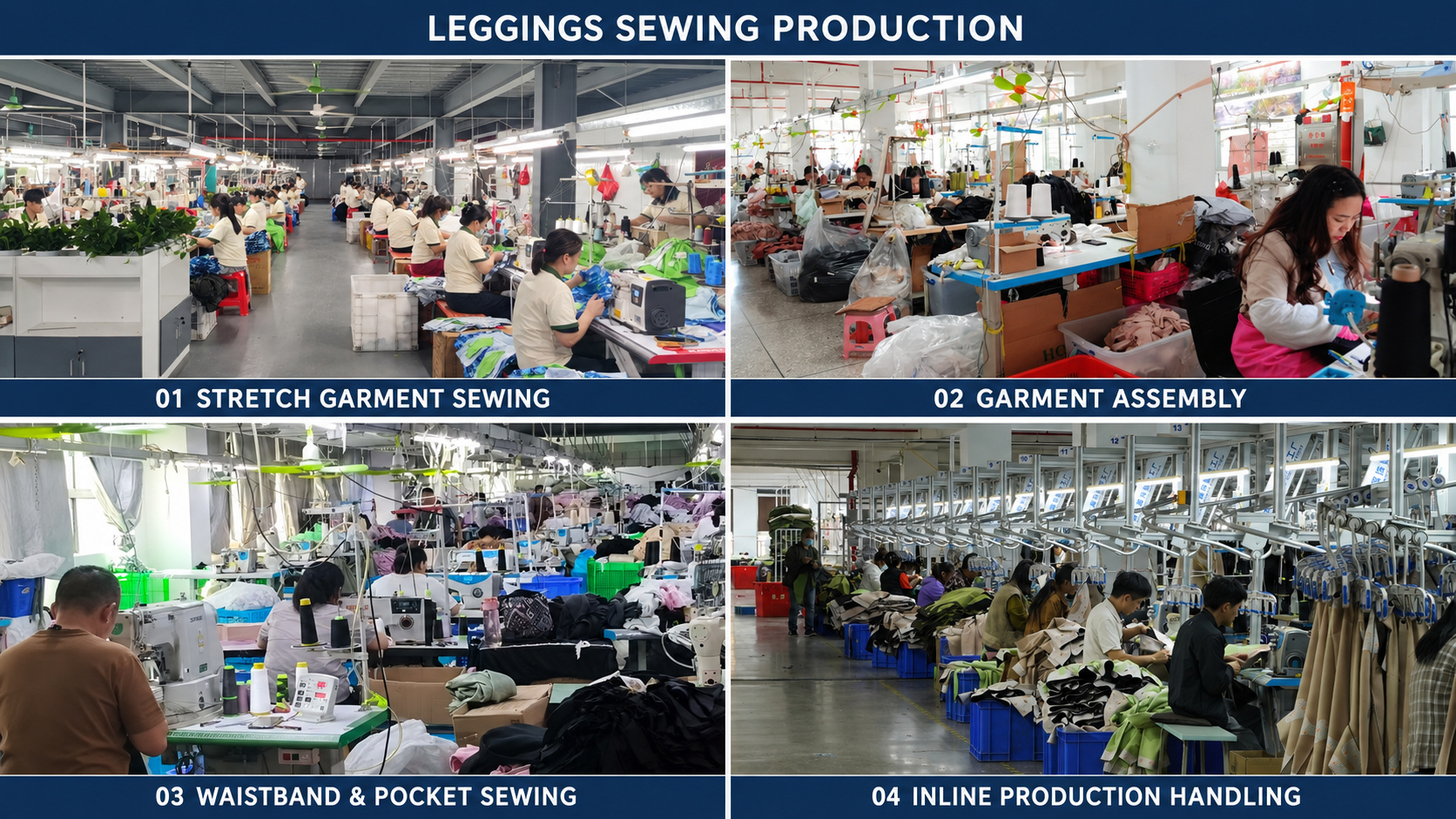
The sewing route depends on the leggings design and required seam performance. Overlock, flatlock, coverstitch, lockstitch and bartack equipment is selected according to seam position, fabric behavior and garment construction.
Production checks focus on seam formation, stitch consistency, waistband joining, pocket alignment, gusset construction, hems and stress points. Pocket leggings require consistent pocket dimensions and secure openings. Sports styles may need flat seams and stable waistbands, while maternity leggings require careful control of belly-panel shape and stretch allowance.
Fleece-lined and PU stretch materials behave differently from standard activewear knits and may require adjusted machine settings, handling and finishing. The objective is not to use every available stitch type, but to select a construction that matches the approved sample and intended use. See our Sewing & Stitching Process for the main sewing considerations.
 Finishing and In-Process Checks
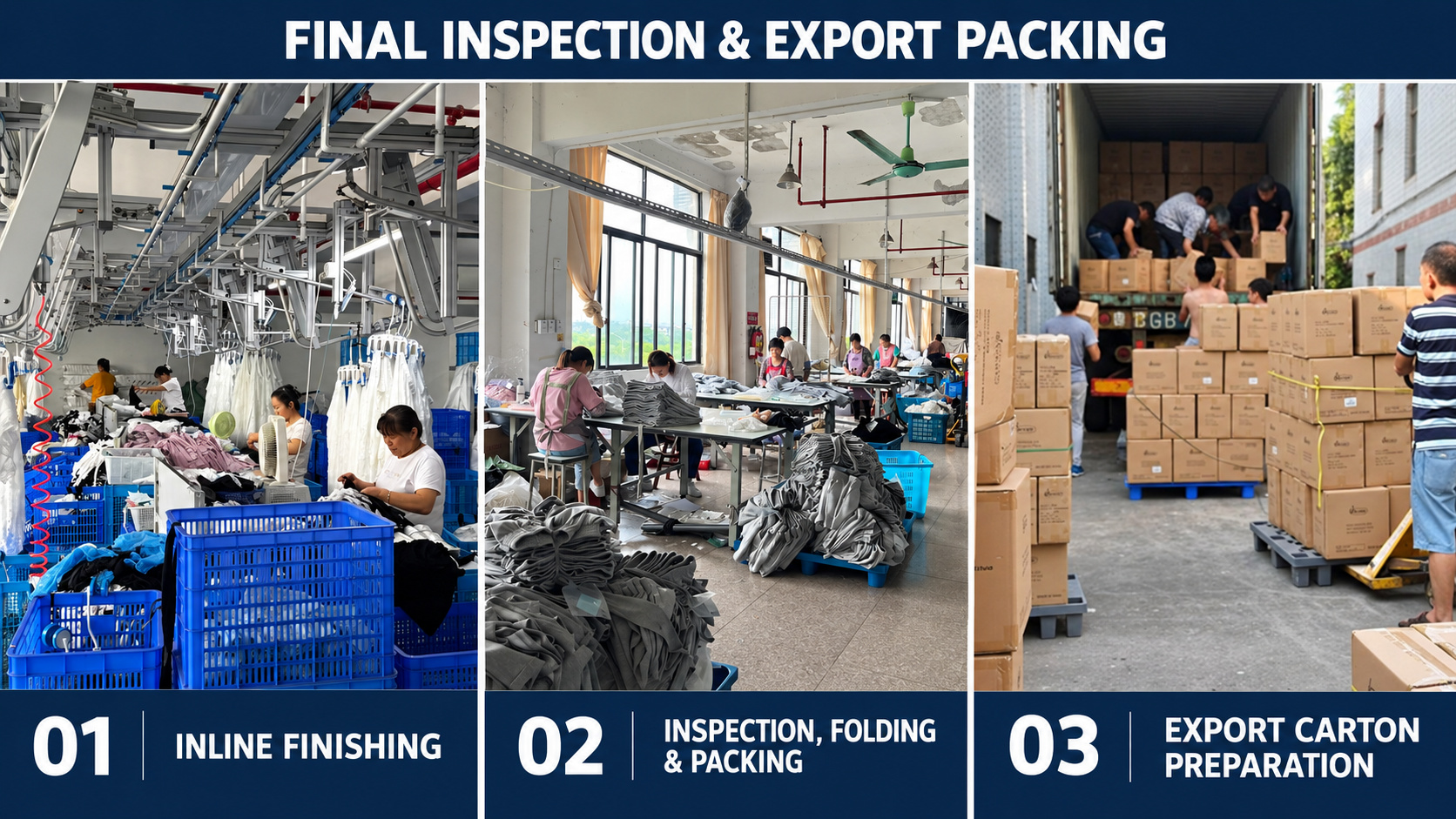
After sewing, loose threads and visible workmanship issues are addressed before the garments proceed to measurement and appearance inspection. Inline and finishing checks help identify recurring issues before the entire order is completed.
Inspection points can include waist, hip, rise, inseam and total length; waistband height and stability; pocket position and dimensions; seam condition; logo placement; and overall appearance. Stretch and recovery are reviewed according to the selected fabric. Opacity or squat-proof performance is checked where applicable to sports and high-stretch styles.
Logo application, care labels, size labels, hangtags and barcodes are compared with the approved specification. If a logo method is sensitive to temperature, pressure or fabric surface, the application result should first be confirmed on the selected material.
Final Inspection and Bulk-Order Consistency
Finished leggings are checked against the approved sample and order specification. The inspection scope covers agreed measurements and tolerances, construction, seams, waistband, pockets, color, branding, labels and appearance.
Quality control should reflect the product type. A sports legging program may prioritize stretch, recovery, opacity and seam performance. Maternity leggings require consistent panel dimensions and size grading. PU leggings need additional attention to surface condition, marks and packing protection.
Buyer-appointed or third-party inspection through SGS, Intertek or BV can be coordinated when requested. Needle detection can also be supported according to the order and buyer requirements.
 Packing, Warehousing and Export Preparation
Approved garments are folded and packed according to the confirmed packing specification. Available options can include standard polybags, printed bags, size stickers, barcode labels, hangtags, retail boxes, master cartons and customized shipping marks.
Before shipment, the packing team verifies style, color, size assortment, unit quantity, carton quantity, labels, barcodes and carton marks. Finished cartons are prepared for warehousing and shipment coordination.
Ningbo is the primary port, with Shanghai available as an alternative. EXW, FOB and CIF are commonly supported, while selected DDP arrangements can be discussed according to destination.
Standard bulk production is typically around 25–35 days after sample and order approval. Custom-dyed fabrics, complex construction or special packaging may extend the schedule to approximately 35–45 days. Buyers should provide the style or tech pack, quantity by color and size, fabric specification, branding, packaging, destination and required delivery date for a practical production assessment.