


Packing Based on the Approved Specification
Packing begins after finished leggings have passed the required garment inspection. Tervoniq prepares OEM, private-label and wholesale orders according to the approved packing specification, size allocation and destination requirements.
Before bulk packing, we confirm the folding method, individual packaging, labels, barcodes, carton assortment, carton quantity and shipping marks. These details should be approved early because custom packaging materials can affect MOQ, cost and production lead time.
The final packing result is checked against the order specification rather than using one standard arrangement for every buyer.
Garment Folding and Individual Packaging
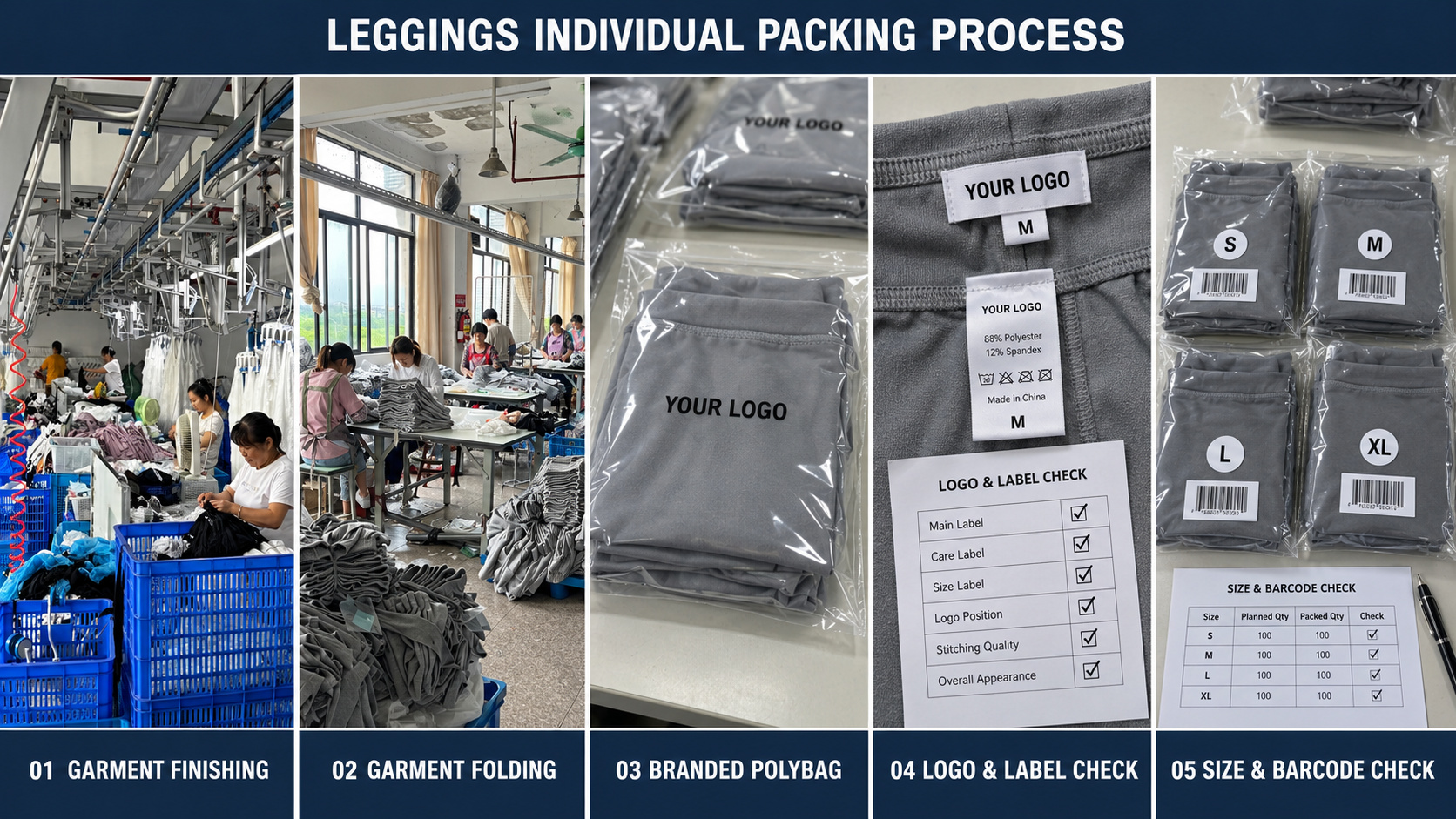
Finished leggings are folded consistently to suit the selected packaging dimensions. The folding method should protect the garment, keep the logo and surface in acceptable condition, and allow units to fit correctly inside the master carton.
Individual packaging options can include:
- Standard transparent polybags
- Printed or frosted branded bags
- Size stickers and barcode labels
- Hangtags and product cards
- Retail boxes or other approved retail packs
PU and faux leather leggings may need additional attention to folding pressure, surface contact and crease protection. Printed or applied logos should be allowed to stabilize before garments are stacked or packed.
Buyers requiring branded bags, retail boxes or special inserts can review the available development route on our Custom Packaging Solutions page.
Labels, Barcodes and Size Allocation
Main labels, care labels, size labels and hangtags are verified before individual units are sealed. Barcode numbers, sticker versions and placement should match the buyer’s approved allocation list.
For orders containing several styles, colors or size ratios, the packing instruction should clearly identify:
- Quantity by style, color and size
- Barcode assigned to each variation
- Units per inner pack or carton
- Solid-size or mixed-size carton requirements
- Required size and color stickers
- Destination-specific labels
Clear allocation data reduces the risk of correct garments being packed with the wrong barcode, size label or carton assortment.
 Master-Carton Packing
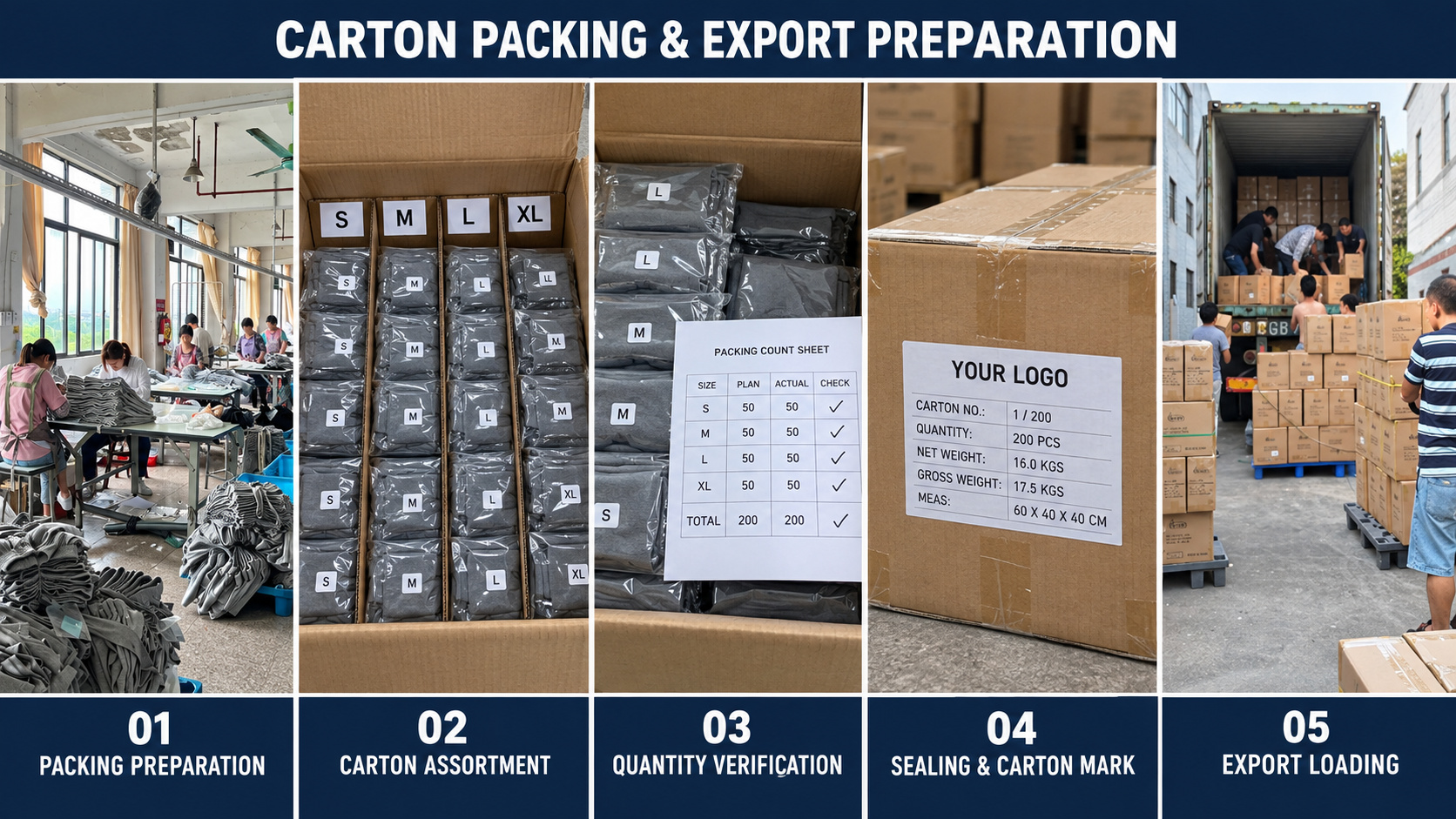
Individually packed leggings are counted and arranged inside the approved master carton. Carton dimensions, unit quantity and packing direction are selected according to the packaging format and shipment requirements.
During packing, the team checks the style, color, size assortment and number of units placed in each carton. Excessive compression should be avoided where it could damage retail boxes, deform packaging or affect sensitive garment surfaces.
Cartons are sealed after the internal quantity and assortment have been confirmed. The total carton count is then compared with the packing list.
Carton Marks and Packing Records
Shipping marks help identify cartons during warehousing, transportation and destination handling. Required information should be provided or approved by the buyer before carton printing or labeling.
Carton details may include the buyer reference, style, color, size assortment, carton number, quantity, gross weight, net weight and carton dimensions, depending on the agreed format.
The packing team verifies that carton marks correspond with the packed contents. Final records should allow the buyer and inspection team to trace the carton assortment without opening every carton.
 Final Packing and Pre-Shipment Checks
Before shipment, packed orders are reviewed for garment quantity, packaging version, labels, barcodes, carton condition and shipping marks. Final garment inspection requirements are explained on our Final Inspection & Quality Control page.
Needle detection can be supported when required by the buyer or product program. Buyer-appointed inspection or third-party inspection through SGS, Intertek or BV can also be coordinated before shipment.
Inspection timing should be confirmed early enough to avoid delaying the planned dispatch date.
Export and Shipping Preparation
Export preparation includes confirming the final packing list, carton count, shipment terms, destination and required delivery schedule.
Ningbo is the primary port, with Shanghai available as an alternative. EXW, FOB and CIF are commonly supported. Selected DDP arrangements can be discussed according to the destination and shipment conditions.
For practical shipment planning, buyers should provide the destination country, preferred shipping term, required delivery date and any carton, label or documentation requirements when requesting a quotation. The complete order sequence is outlined on our Leggings Production Process page.