


Inspection Against Approved Order Requirements
Tervoniq inspects finished leggings against the approved sample, size chart, measurement tolerances, construction specification, branding details and packing instructions. These references provide measurable acceptance criteria for production and final inspection.
Inspection priorities depend on the product type. Sports leggings may require additional stretch, recovery and opacity checks. Pocket leggings need consistent pocket dimensions and secure openings. Maternity styles require correct belly-panel construction and size grading. Fleece-lined and PU stretch leggings have their own surface, thickness and appearance requirements.
Quality decisions are based on the confirmed order specification rather than general descriptions such as “good quality.”
Measurement and Size Inspection
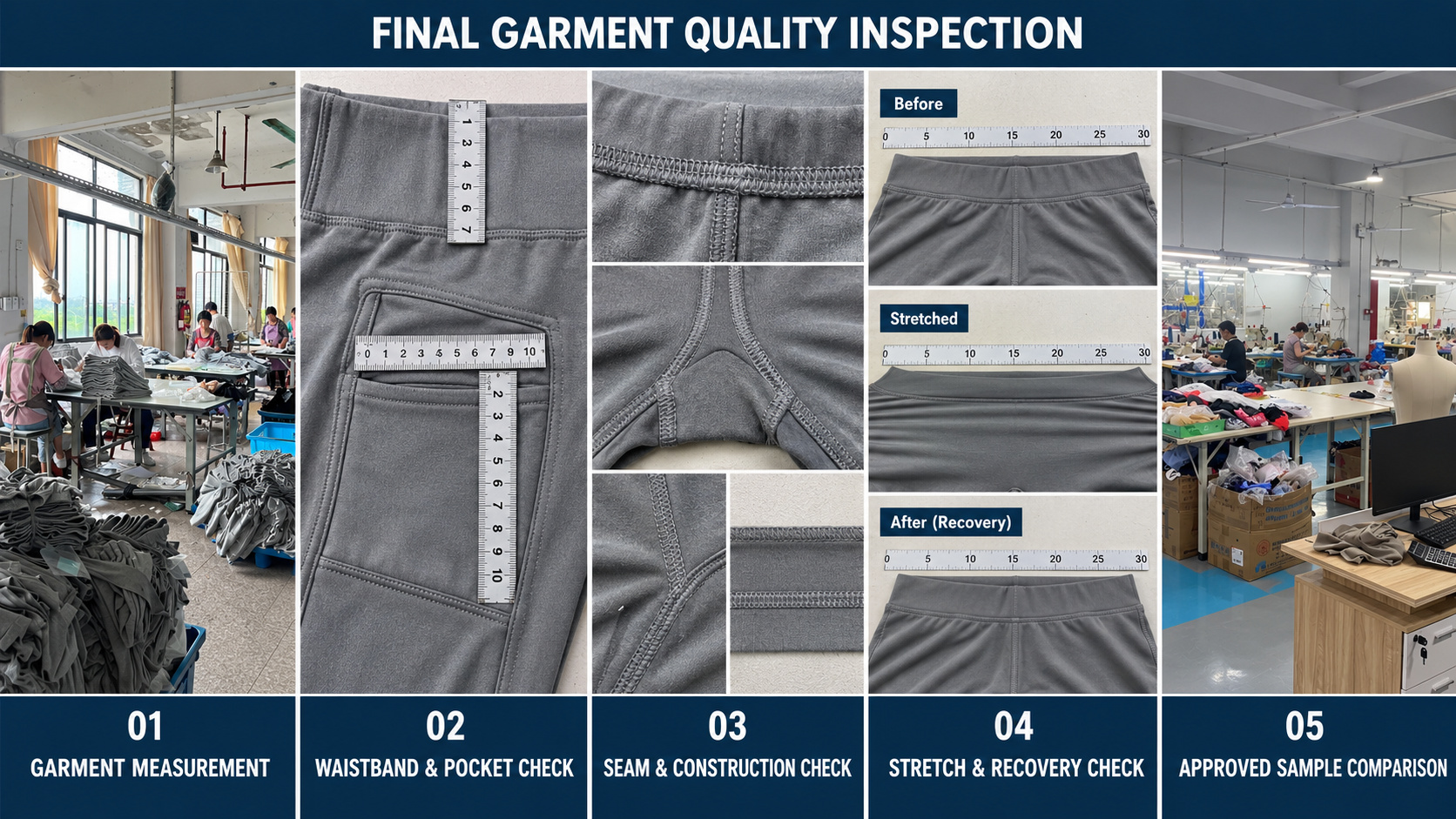
Finished garments are laid flat and measured using a consistent method. Common measurement points include:
- Relaxed and stretched waist where specified
- Hip width
- Front and back rise
- Inseam and total length
- Waistband height
- Leg opening
- Pocket width, depth and position
Measurements are compared with the approved size chart and agreed tolerances. Size grading is also reviewed to identify unexpected differences between adjacent sizes.
Measurement control begins during sampling and continues through bulk production. Inspection should identify both isolated defects and repeated measurement trends. Related performance checks are explained on our Stretch & Fit Testing page.
Sewing and Construction Checks
Sewing inspection covers stitch formation, seam alignment, hems, waistband joining, gusset construction, pocket attachment and specified reinforcement.
Inspectors look for skipped stitches, broken threads, open seams, twisting, puckering and visible needle damage. Stretch seams should extend with the garment without immediate thread breakage or excessive restriction.
Construction is compared with the approved sample because different leggings programs may use different stitch types and reinforcement methods. More information about these production controls is available on our Sewing & Stitching Process page.
 Fabric, Color and Appearance Inspection
Finished leggings are checked for visible fabric defects, shade variation, stains, marks, surface damage and garment symmetry.
Stretch and recovery are reviewed where applicable. Sports and high-stretch styles may include opacity or squat-proof assessment according to the approved product requirements. PU and faux leather leggings need additional checks for scratches, creasing, backing condition and surface consistency.
Color is compared with the approved sample or retained fabric reference. Obvious shade differences should not be mixed within the same garment or packed assortment.
Logo, Label and Trim Verification
Logo dimensions, color, position and application quality are checked against the confirmed specification. Heat-transfer edges, silicone applications and embroidery appearance are reviewed according to the selected method.
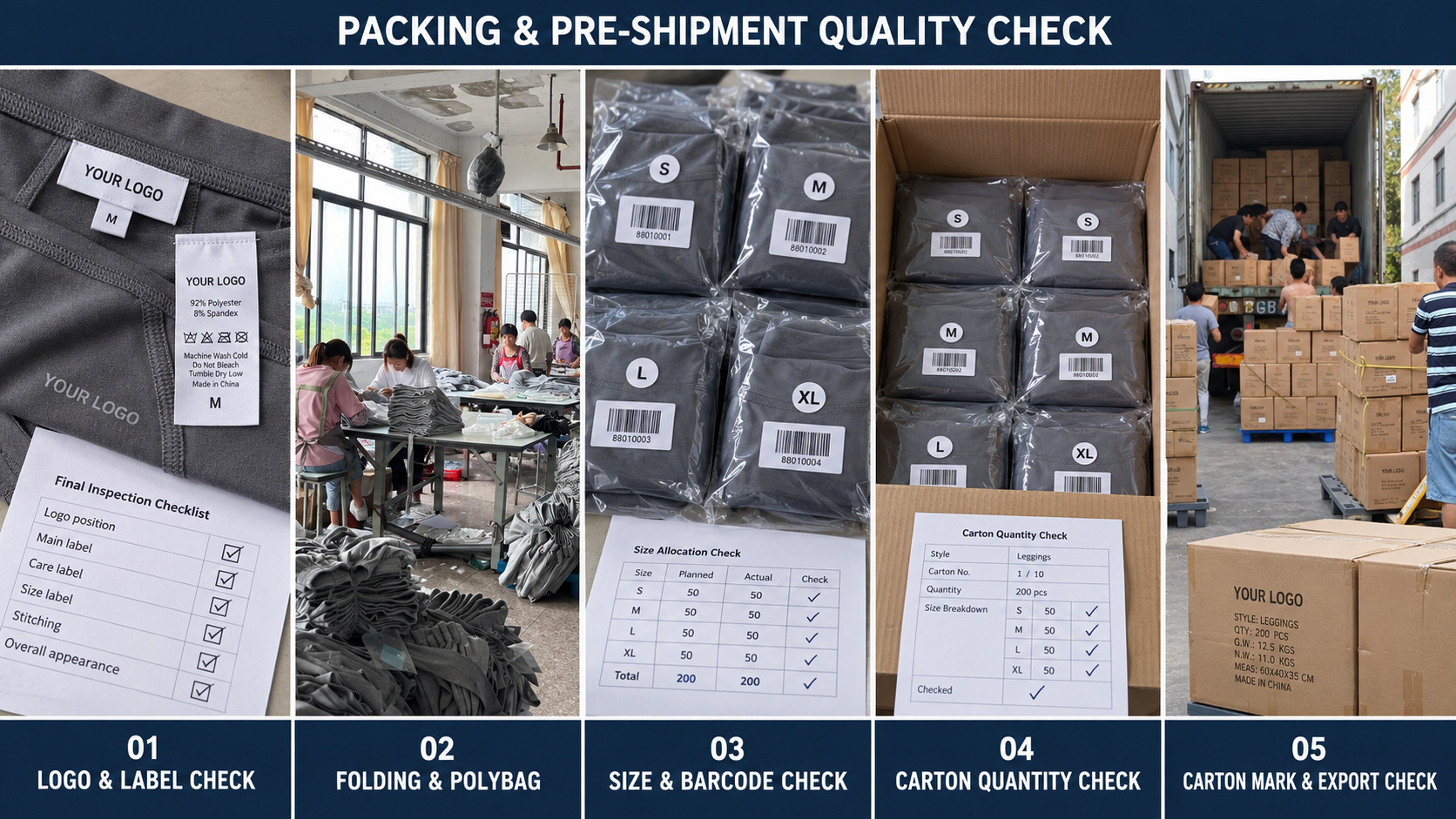
Main labels, care labels, size labels, hangtags and barcodes are checked for the correct version and placement. For orders involving several sizes, destination markets or barcode references, buyers should provide a clear allocation list before production.
Logo application and positioning controls are covered on our Printing & Logo Application page.
Packing and Quantity Checks
Inspection continues through packing because incorrect labels, size assortments or carton quantities can delay delivery even when the garments themselves are acceptable.
Packing checks can include:
- Garment folding and individual packaging
- Size stickers and barcode labels
- Hangtags and retail packaging
- Quantity by style, color and size
- Carton assortment and unit count
- Master-carton condition and shipping marks
The final packing result is compared with the approved packing specification. Any special folding method, retail box, printed bag or carton assortment should be confirmed before bulk packing begins.
 Pre-Shipment Inspection Support
Final inspection is completed before the order is released for shipment. Needle detection can be supported when required by the buyer or product program.
Buyer-appointed third-party inspections through SGS, Intertek or BV can also be coordinated when requested. Buyers should provide the inspection standard, booking information and required timing early enough to include the inspection in the production and shipment schedule.
Detailed packing and shipping checks are explained on our Packing & Export Preparation page.
For an appropriate inspection plan, buyers should confirm the product specification, measurement tolerances, testing requirements, packaging instructions and any appointed third-party inspection arrangement before bulk production begins.