


Selecting Fabric for the Intended Leggings Program
Fabric selection affects fit, stretch, recovery, opacity, hand feel, sewing performance and final cost. Tervoniq works with activewear brands, apparel wholesalers, importers and private-label buyers to confirm suitable materials before custom leggings samples enter production.
The material should be selected according to the product category and target market. Sports leggings usually require controlled stretch, recovery and opacity. Maternity styles require softness and suitable stretch allowance. Fleece-lined leggings need sufficient warmth without losing garment flexibility, while PU or faux leather styles require careful review of surface finish, backing fabric and stretch performance.
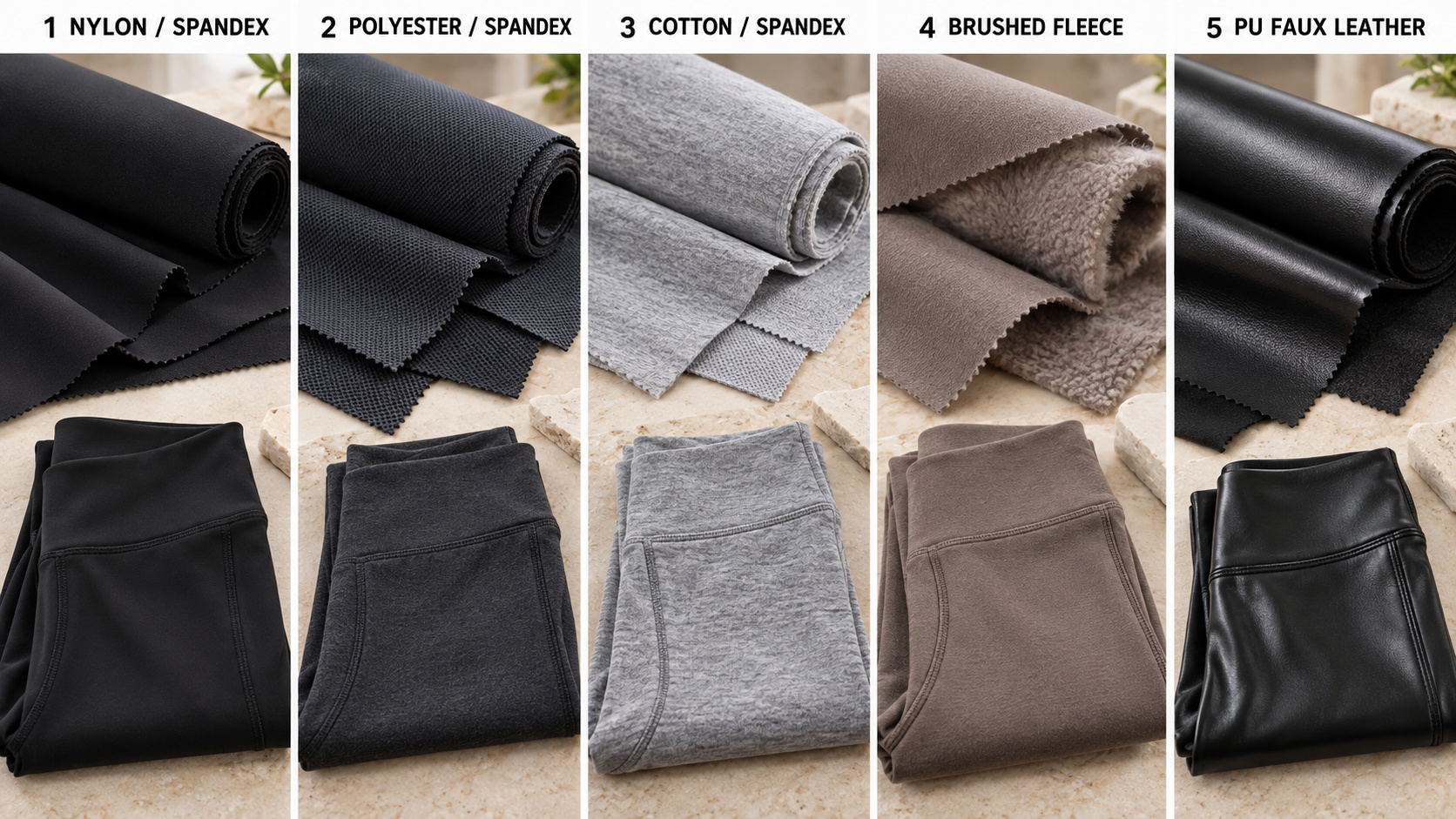 Common Leggings Material Options
Nylon/spandex fabrics are commonly selected for smooth hand feel, stretch and activewear applications. Polyester/spandex options can support sports, printed and general wholesale programs, depending on fabric construction and required performance.
Cotton/spandex blends are suitable for softer casual or maternity leggings where comfort is more important than a highly technical surface. Brushed and fleece-lined polyester/spandex materials are used for cold-weather programs. PU or faux leather stretch constructions combine a coated surface with a flexible backing and require separate checks for appearance, recovery and sewing compatibility.
Viscose blends and selected wool-blend knitted fabrics may be considered for specific comfort or seasonal programs. Material availability, minimum quantity and lead time must be confirmed for each project rather than assumed from a general fabric list.
GSM, Stretch and Recovery
Fabric composition alone does not define how a pair of leggings will perform. Buyers should also confirm GSM, knitting structure, stretch direction, recovery, surface finish and hand feel.
A heavier fabric is not automatically more opaque or more supportive. Opacity also depends on yarn, knit density, color, garment measurements and how far the fabric stretches during wear. Recovery affects whether the waistband and garment return to shape after stretching.
For sports and high-stretch styles, material evaluation may include stretch, recovery and opacity checks during stretch and fit testing. Final performance should be approved using the selected fabric and actual garment construction.
Color and Surface Confirmation
Buyers may select available fabric colors or request custom dyeing based on a Pantone reference. Available colors usually support a more practical MOQ and shorter development schedule. Custom-dyed fabric requires color matching and approval before bulk cutting and may increase the material MOQ and lead time.
Color should be reviewed under consistent lighting and on the actual fabric because fiber content, surface texture and finish can affect the visual result. Brushed fabric, smooth performance fabric and PU-coated material will not display the same color or gloss in the same way.
Color approval should be coordinated with the required size range and garment specification through our color and size customization process.
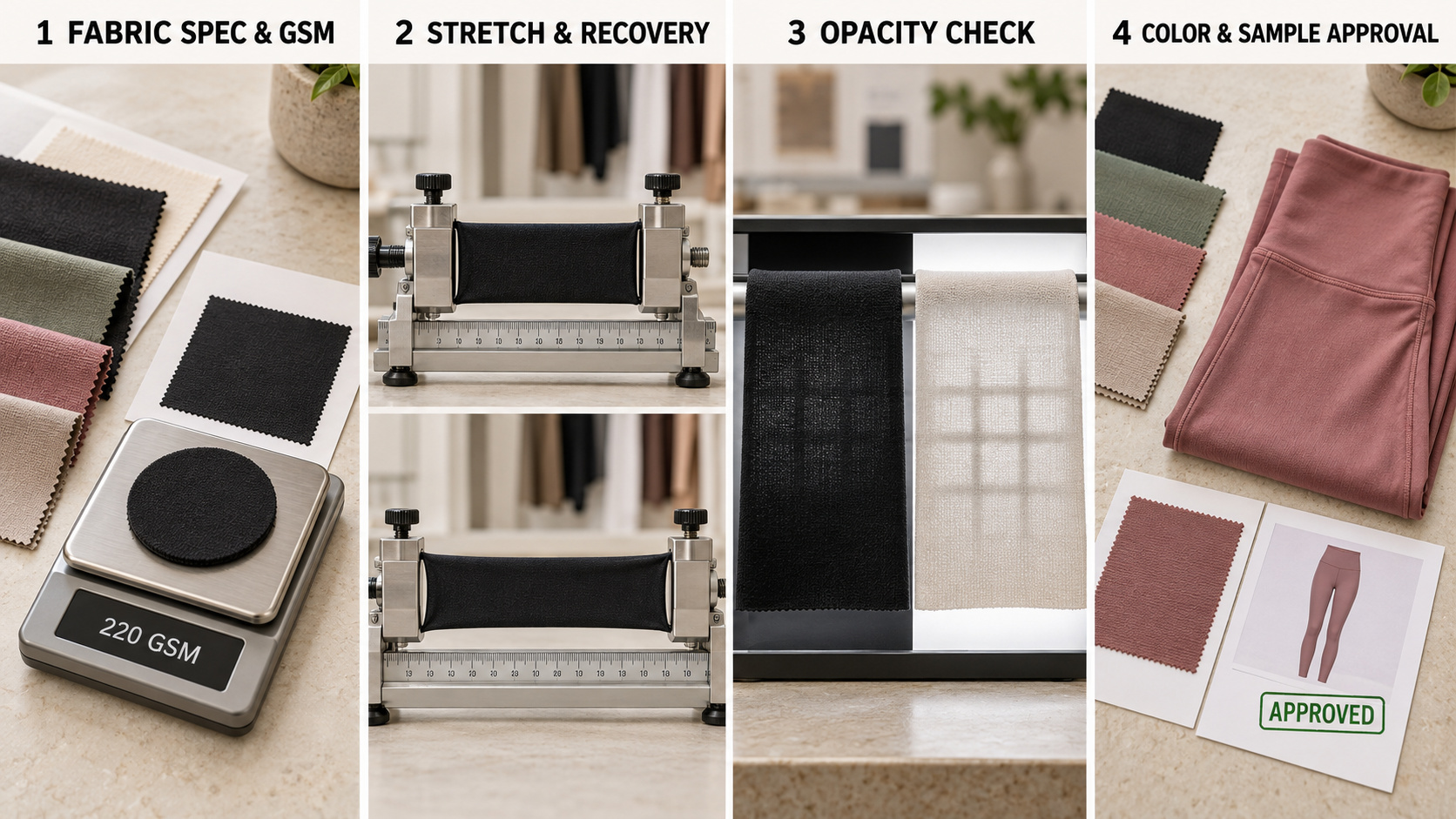 Fabric Sampling Before Bulk Production
Before making the first custom sample, we confirm the selected fabric, composition, weight or GSM where applicable, color, finish and intended product use. If the buyer provides a reference garment, we compare the required hand feel and performance direction but do not assume that an unidentified fabric can be reproduced exactly.
The garment sample is then checked for measurements, appearance, stretch, recovery, seam compatibility and opacity where applicable. Any material change after approval may require a new sample because different fabrics can alter fit, sewing tension and finished measurements.
The approved fabric swatch and garment sample are retained as references during the sample development and bulk production stages.
MOQ, Lead Time and Quotation Details
Selected existing fabrics normally offer more workable minimum quantities. Existing-style programs commonly start around 300–500 pieces per style and color, while private-label or customized orders are generally around 500–1,000 pieces. Special materials or custom dyeing may require 1,000 pieces or more.
For material review and quotation, please provide the leggings style, estimated quantity by color, preferred composition, GSM if known, required stretch or hand feel, color reference, size range, destination and target delivery date. We will confirm fabric availability, sampling requirements, practical MOQ and the expected production schedule.