


Logo Application Based on Fabric and Design
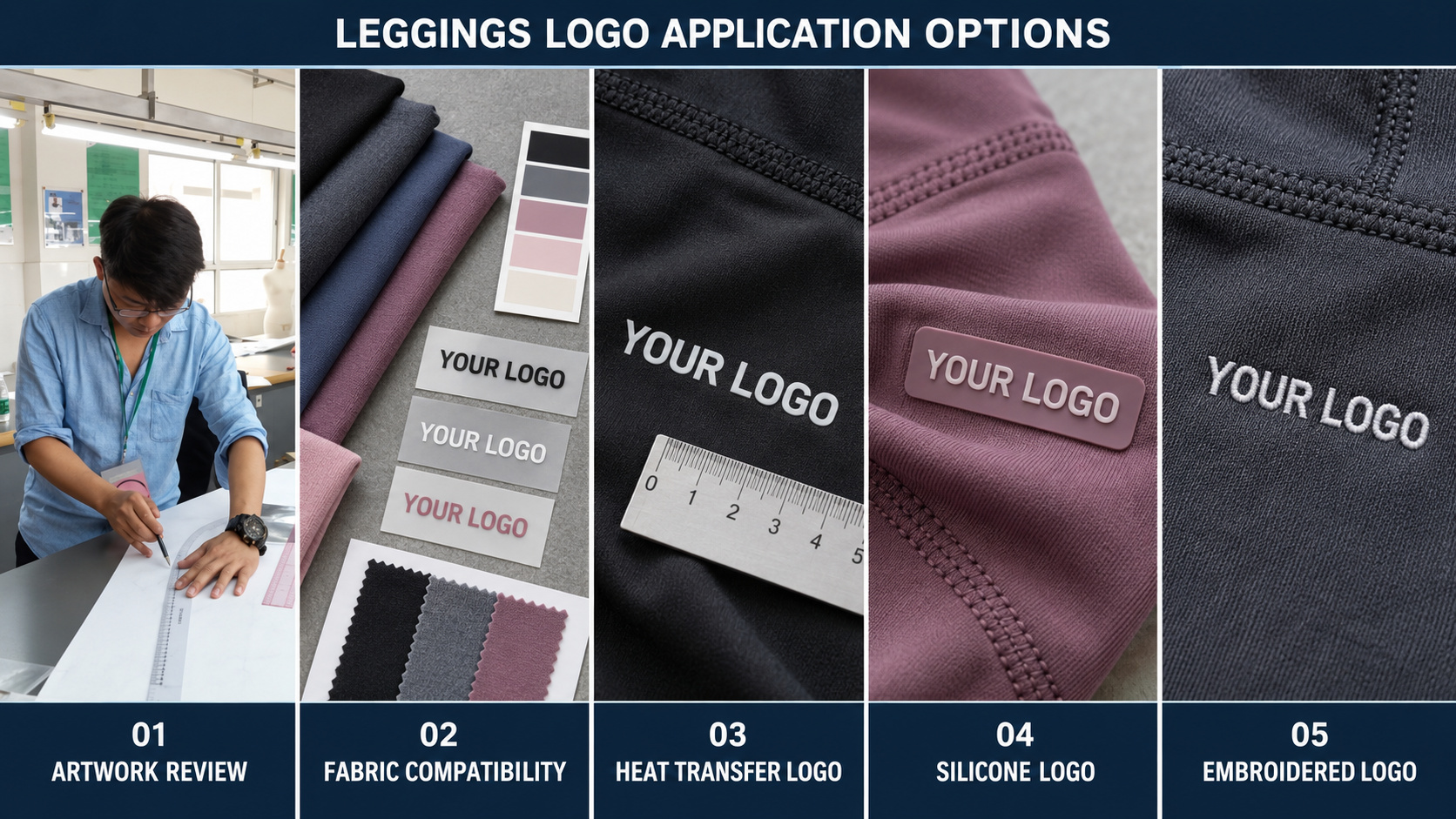
Tervoniq supports logo application for OEM and private-label leggings programs. Common options include heat-transfer logos, silicone applications and embroidery, depending on the selected fabric, logo design, placement and intended use.
A suitable method must remain compatible with the garment’s stretch, surface texture and care requirements. A logo that works on a smooth sports fabric may not produce the same result on brushed fleece, cotton blends or PU stretch material.
The branding method is therefore reviewed together with the approved fabric and garment construction rather than selected only by appearance.
Artwork and Application Details Required
Vector artwork is preferred because it allows the logo dimensions and edges to be prepared more accurately. Buyers should provide AI, EPS, PDF or another usable vector format where available.
Before sampling, the following details should be confirmed:
- Final logo artwork
- Required width and height
- Pantone or other color reference
- Placement on the garment
- Distance from seams or garment edges
- Application method if already specified
- Number of logo colors
- Required appearance and surface finish
- Care or durability expectations
A marked placement drawing is useful for identifying the exact location. General descriptions such as “on the side” or “near the waistband” can lead to different interpretations during sampling.
Brand labels, care labels and size labels can be coordinated separately through our Logo & Label Customization service.
Fabric Compatibility and Trial Application
Stretch fabric moves during wear, so the logo must be evaluated on the actual selected material. Fabric composition, GSM, surface finish, stretch, recovery and color can all affect adhesion, coverage and appearance.
Heat-transfer applications require suitable temperature, pressure and time settings. Excessive heat may mark or change sensitive fabrics, while insufficient application can cause weak bonding. Silicone logos need appropriate attachment and flexibility. Embroidery may add texture and durability, but it can also reduce stretch locally or create distortion if the design is too dense for lightweight fabric.
A trial application helps confirm color, edge definition, surface condition and stretch behavior before the logo is applied to a complete sample. Buyers selecting materials can first review our Fabric & Material Selection page.
 Sample Approval Before Bulk Application
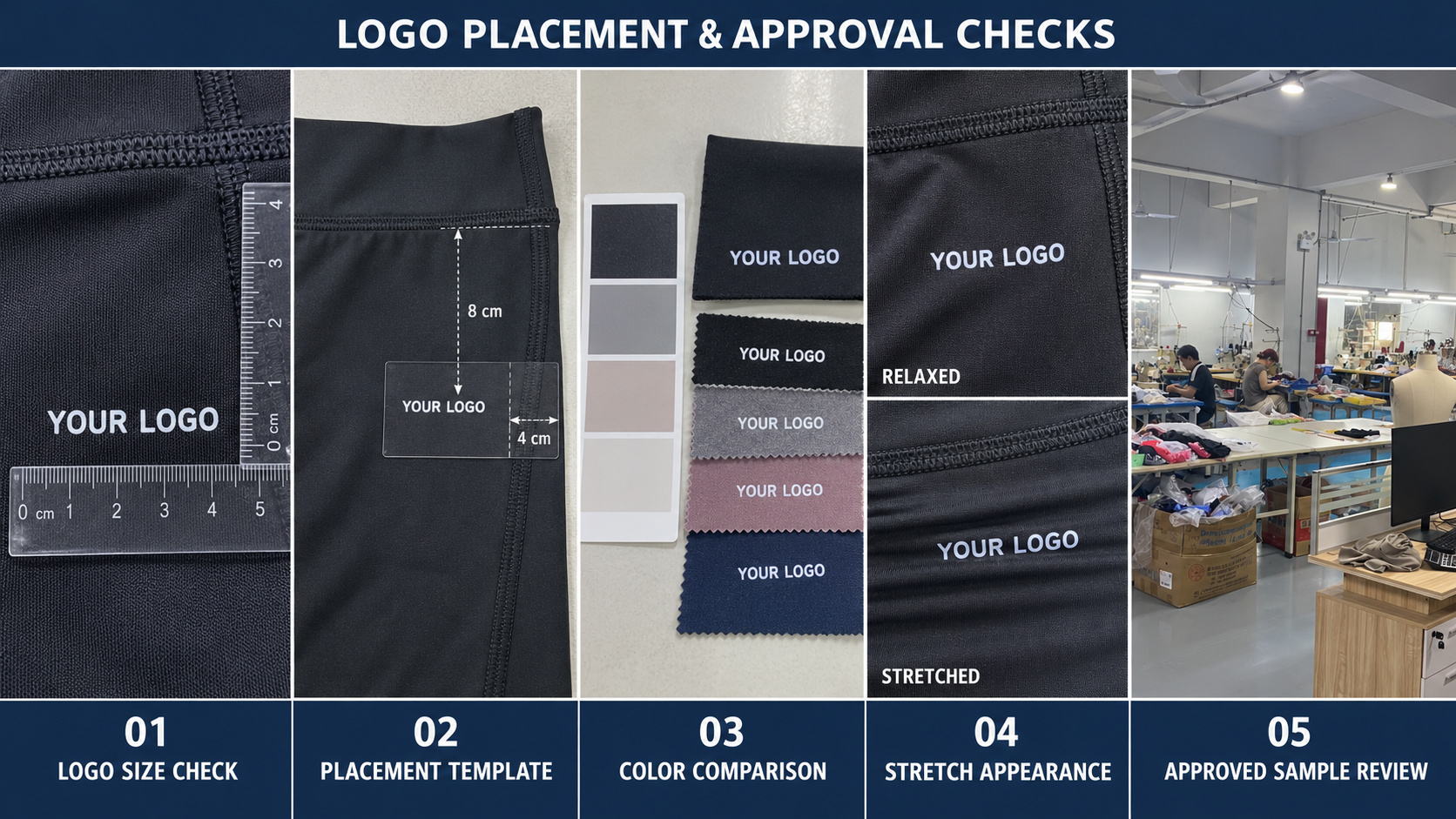
The logo should be approved on the actual leggings sample whenever possible. Approval should cover more than the logo artwork itself.
We recommend checking:
- Finished dimensions and proportions
- Color against the approved reference
- Position and distance from seams
- Alignment when the garment is laid flat
- Appearance when the fabric is stretched
- Surface marks, lifting or distortion
- Compatibility with the agreed care method
Modified or private-label samples are typically completed in approximately 7–12 days, depending on fabric availability, development requirements and branding complexity. Deeper developments may require around 10–15 days.
The sample approval route is explained on our Sample Development page.
Placement and Bulk-Production Control
The approved specification should state measurable logo dimensions and positioning. Placement templates or reference measurements can then be used to maintain consistency across bulk production.
Production checks focus on incorrect position, uneven alignment, color variation, incomplete transfer, damaged edges, surface marks and visible distortion. Garments should be allowed to cool or stabilize as required before stacking and packing so that applied logos are not damaged by handling.
If a style contains several branding elements—such as a garment logo, main label, care label, hangtag and branded packaging—each component should be listed separately in the production and packing specification.
 Cost, MOQ and Lead-Time Considerations
Logo cost is affected by the application method, dimensions, number of colors, order quantity and any setup required. Complex artwork, multiple placements or special materials may increase sampling time and unit cost.
Private-label or customized leggings programs commonly start around 500–1,000 pieces, while practical quantities depend on the style, fabric, color and branding process. Logo materials or special color preparation can also have separate minimum requirements.
For an accurate quotation, buyers should provide the leggings style, fabric, order quantity by color, vector artwork, logo dimensions, placement reference and required sample schedule. Finished branding is checked again during Final Inspection & Quality Control before packing.