


Testing Based on Product Use and Approved Requirements
Stretch and fit checks confirm whether leggings perform as intended before and during bulk production. The testing requirements depend on the selected fabric, garment construction and end use rather than applying one standard to every style.
Sports leggings may require controlled compression, four-way stretch, recovery and opacity checks. Pocket leggings need sufficient stretch without distorting the pocket opening. Maternity leggings require appropriate expansion through the belly panel, while fleece-lined and PU stretch styles must balance comfort with their heavier or less flexible material structures.
Testing references include the approved sample, confirmed fabric, size chart, construction details and agreed measurement tolerances.
Fabric Stretch and Recovery Review
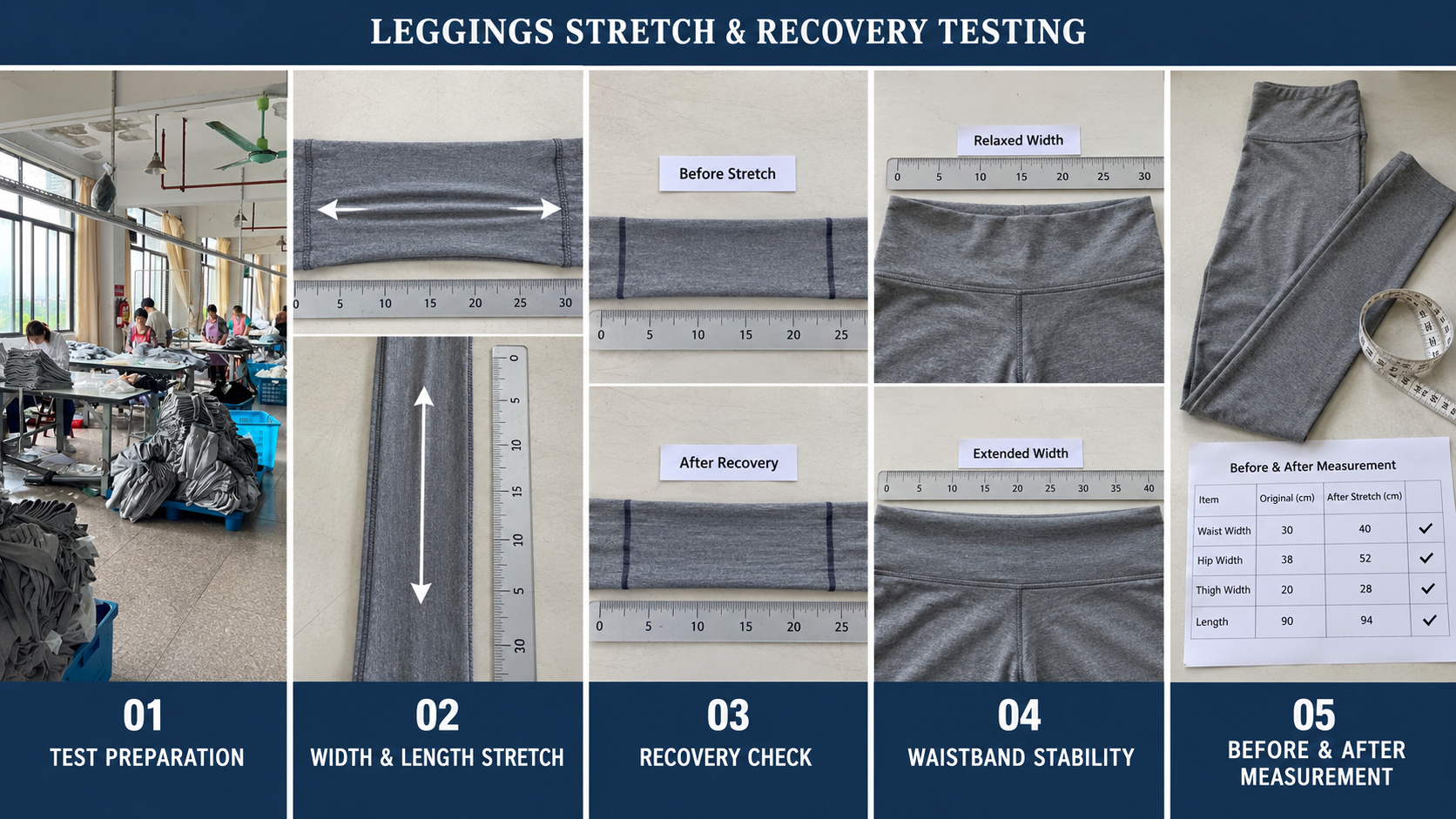
Fabric stretch should be considered in both width and length directions. The amount of stretch affects pattern dimensions, garment fit and freedom of movement. Recovery describes how well the material returns toward its original dimensions after extension.
During development, we review whether the selected fabric provides suitable stretch and recovery for the intended style. A fabric that stretches easily but recovers poorly may lead to bagging around the knees, waist or seat. A material with excessive resistance can make the garment feel tighter than the approved size specification suggests.
Fabric composition and GSM alone do not fully describe performance. Knit construction, finishing and spandex content can also affect the result. Material choices can be reviewed through our Fabric & Material Selection process.
 Garment Measurement Checks
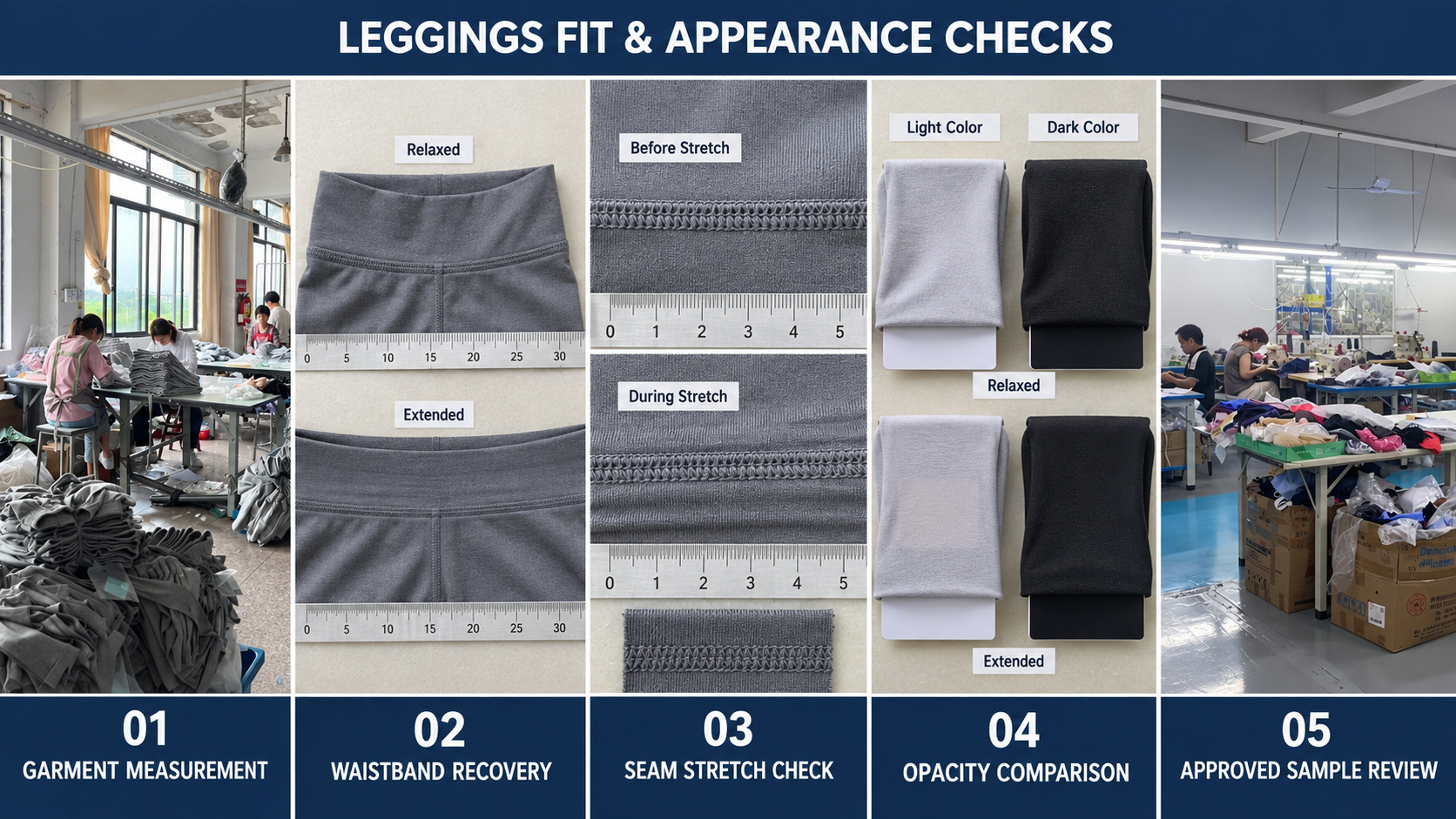
Finished-garment measurements are checked against the approved size chart and tolerances. Typical measurement points include:
- Relaxed waist and stretched waist
- Hip width
- Front and back rise
- Inseam and total length
- Waistband height
- Leg opening
- Pocket position, width and depth
Measurements should be taken using an agreed method because stretch garments can produce different results if they are pulled, compressed or positioned inconsistently during inspection.
Size grading is also reviewed across the required range. The relationship between sizes should remain consistent without creating sudden changes in waistband dimensions, rise, inseam or pocket placement. Sample measurements and grading should be approved through Sample Development before bulk cutting begins.
Waistband and Construction Stability
The waistband is checked for height, symmetry, recovery and stability against the approved sample. It should lie evenly without excessive twisting, rippling or uneven joining.
Seams around the waistband, gusset, inseam and pockets are reviewed under reasonable extension. Stitching should accommodate the garment’s intended stretch without breaking or restricting movement. Pocket openings and stress points receive additional attention because repeated use can place concentrated force on these areas.
If sewing tension, stitch type or seam construction affects stretch performance, the issue should be corrected during production rather than left for final inspection. Relevant seam controls are covered on our Sewing & Stitching Process page.
Opacity and Appearance Under Stretch
Opacity or squat-proof performance is checked where applicable to sports and high-stretch leggings. The result can be affected by fabric color, GSM, knit density, stretch level, print design and garment size.
A fabric may appear opaque while relaxed but become more transparent when stretched. For this reason, approval should be based on the actual selected material and color rather than a general fabric description.
Appearance checks can also include surface whitening, print distortion, excessive shine and visible seam or pocket-bag outlines under stretch. These points should be reviewed during sampling if they are important to the target market.
 Sample-to-Bulk Comparison
Bulk garments are compared with the approved sample for measurements, fit-related construction, fabric behavior and overall appearance. Testing is performed at relevant stages so that recurring issues can be identified before packing.
Final inspection may include measurement verification, seam review, waistband stability, stretch and recovery checks, pocket construction and opacity assessment where specified. The complete finished-garment inspection scope is explained on our Final Inspection & Quality Control page.
For an accurate testing plan, buyers should provide the intended product use, fabric requirements, size chart, tolerances and any specific expectations for compression, recovery or opacity before sample approval.