


Sewing Construction Based on the Approved Sample
Leggings sewing begins after fabric panels have been cut, identified and grouped by style, color and size. The sewing team follows the approved sample, construction specification, size chart and seam requirements established before bulk production.
The required operations vary by product. Sports leggings may use flat seams, gussets and reinforced pocket openings. Maternity leggings require controlled belly-panel construction, while fleece-lined and PU stretch styles need machine settings and handling suited to their material thickness and surface.
The objective is to reproduce the approved garment construction consistently across the order rather than apply the same stitching method to every style.
Sewing Equipment and Seam Selection
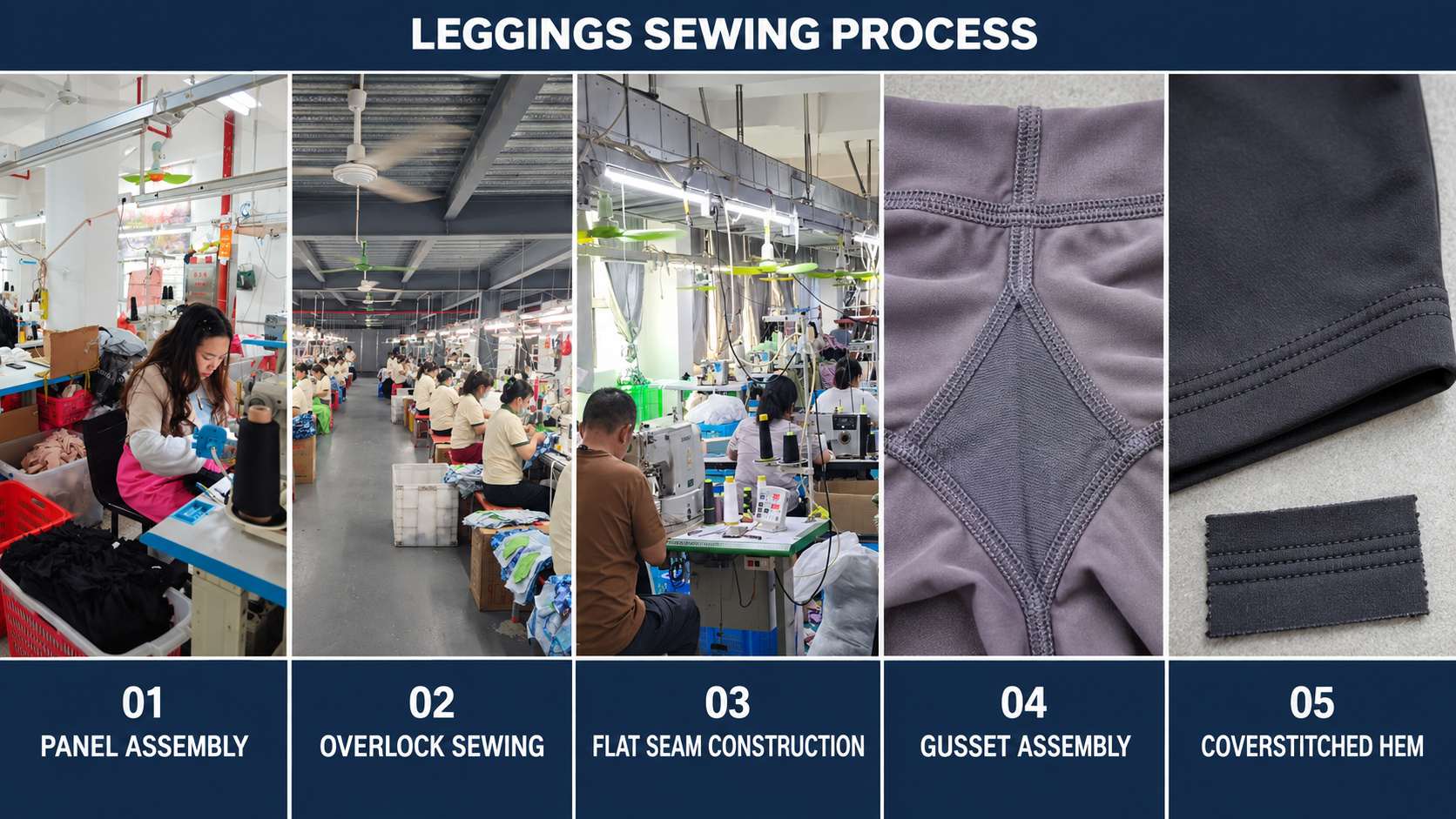
Overlock, flatlock, coverstitch, lockstitch and bartack equipment may be selected according to seam position and functional requirements.
Overlock stitching is commonly used to join stretch garment panels while controlling raw edges. Flatlock construction may be specified for selected sportswear seams where a flatter internal surface is preferred. Coverstitch is generally used for stretch hems and selected waistband details. Lockstitch and bartack operations may be applied to labels, openings or stress points where the design requires them.
Machine type, needle, thread and stitch settings should match the fabric. Incorrect settings can cause skipped stitches, seam puckering, thread breakage, fabric damage or restricted stretch.
Fabric preparation before sewing is explained on our Fabric Inspection & Cutting page.
Body Panels, Gussets and Inseams
The main garment panels are assembled in the specified sequence. Operators check that corresponding sizes and shade lots remain correctly matched during production.
Gussets require accurate positioning because they affect comfort, movement and seam alignment. Front, back and inseam construction should follow the approved pattern without twisting or uneven joining.
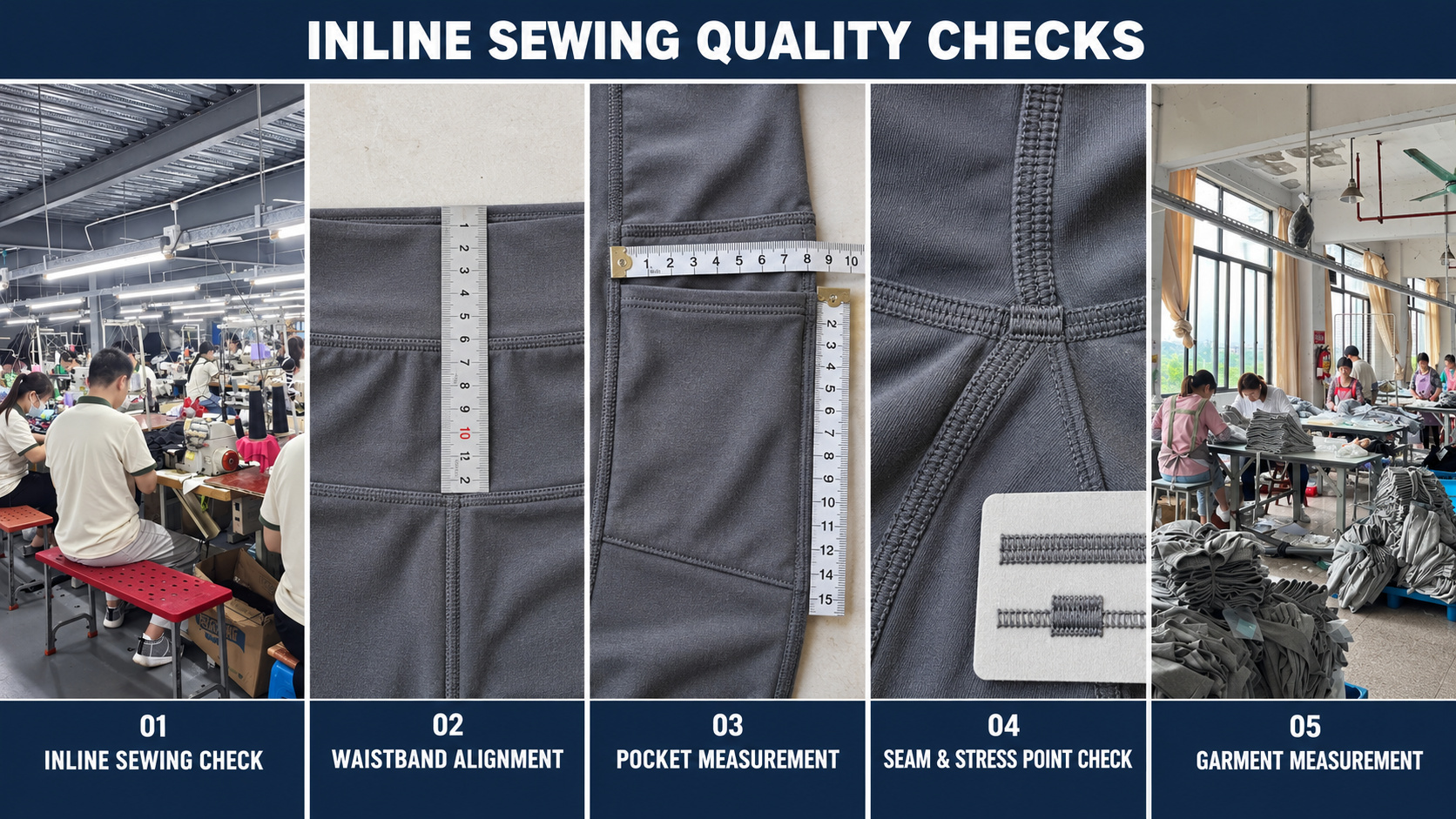
Inline checks focus on stitch formation, seam allowance, panel alignment and visible fabric damage. Stretch seams should extend with the garment without breaking or creating excessive restriction.
 Waistband Construction
The waistband influences fit, support and appearance. Before sewing, the production team confirms waistband height, layer construction, elastic requirements and joining method.
Waistband components should be aligned evenly with the body panels. Checks cover seam position, top-edge appearance, symmetry and stability. Uneven joining can cause twisting, rippling or inconsistent waist measurements.
For maternity leggings, the belly panel or supportive waistband must follow the approved shape, stretch allowance and size grading. Sports leggings may require a high-rise waistband with controlled compression, depending on the selected fabric and design.
Pocket Sewing and Reinforcement
Pocket position, dimensions and opening construction are confirmed during sampling. Pocket panels should be aligned consistently between garments and securely joined to the surrounding body panels.
Inspection points include pocket width and depth, opening shape, seam alignment and symmetry. Stress areas may require bartack or another approved reinforcement method. Reinforcement should secure the construction without making the surrounding stretch fabric excessively rigid.
Buyers should provide measurable pocket dimensions and placement references rather than relying only on product photographs.
Inline Sewing Inspection
Sewing quality is monitored during production so recurring issues can be corrected before the order reaches final inspection. Typical inline checks include:
- Skipped, broken or loose stitches
- Uneven, twisted or puckered seams
- Waistband and gusset alignment
- Pocket position and opening security
- Hem width and stitch consistency
- Fabric damage around needle points
- Seam performance under reasonable stretch
Measurement checks may also be conducted during production to confirm that sewing operations are not changing the agreed garment dimensions.
 From Sewing to Finishing and Final Inspection
Completed garments proceed to thread trimming, finishing, measurement and appearance checks. Finished leggings are compared with the approved sample and production specification for construction, dimensions, logo position and overall workmanship.
Stretch, recovery and opacity or squat-proof performance are checked where applicable to the selected product. The complete assessment is covered on our Stretch & Fit Testing and Final Inspection & Quality Control pages.
For production assessment, buyers should provide the style or tech pack, fabric requirement, size chart, seam details, waistband and pocket construction, estimated quantity and approved sample requirements. These details allow the sewing route and practical lead time to be reviewed before bulk production.