


Why Fabric Control Starts Before Sewing
Fabric affects the fit, appearance and performance of finished leggings. Differences in GSM, stretch direction, recovery, width or shade can cause inconsistent measurements and visible variation in bulk production.
Before cutting, incoming fabric is reviewed against the approved material specification and sample. The inspection points depend on the fabric type and intended product. Nylon/spandex and polyester/spandex fabrics used for sports leggings require different handling from cotton blends, brushed fleece materials or PU stretch constructions.
The objective is to identify relevant material issues before the fabric is converted into garment panels.
Incoming Fabric Inspection
Incoming fabric is checked for shade consistency, visible defects, usable width and applicable specification details. Fabric rolls or lots are identified so that significant shade differences are not mixed without review.
Common inspection points include:
- Fabric composition and GSM against the approved requirement
- Usable fabric width and roll identification
- Color and shade-lot consistency
- Visible marks, holes, stains, lines or surface damage
- Stretch direction and approximate stretch performance
- Recovery, hand feel and surface finish
- Opacity where applicable to sports or high-stretch leggings
Brushed or fleece-lined fabrics require attention to inner finish and surface direction. PU or faux leather stretch materials should be reviewed for marks, creasing, backing consistency and surface variation.
If a material does not match the approved reference, it should be reviewed before spreading and cutting continue. Buyers can compare common material options on our Fabric & Material Selection page.
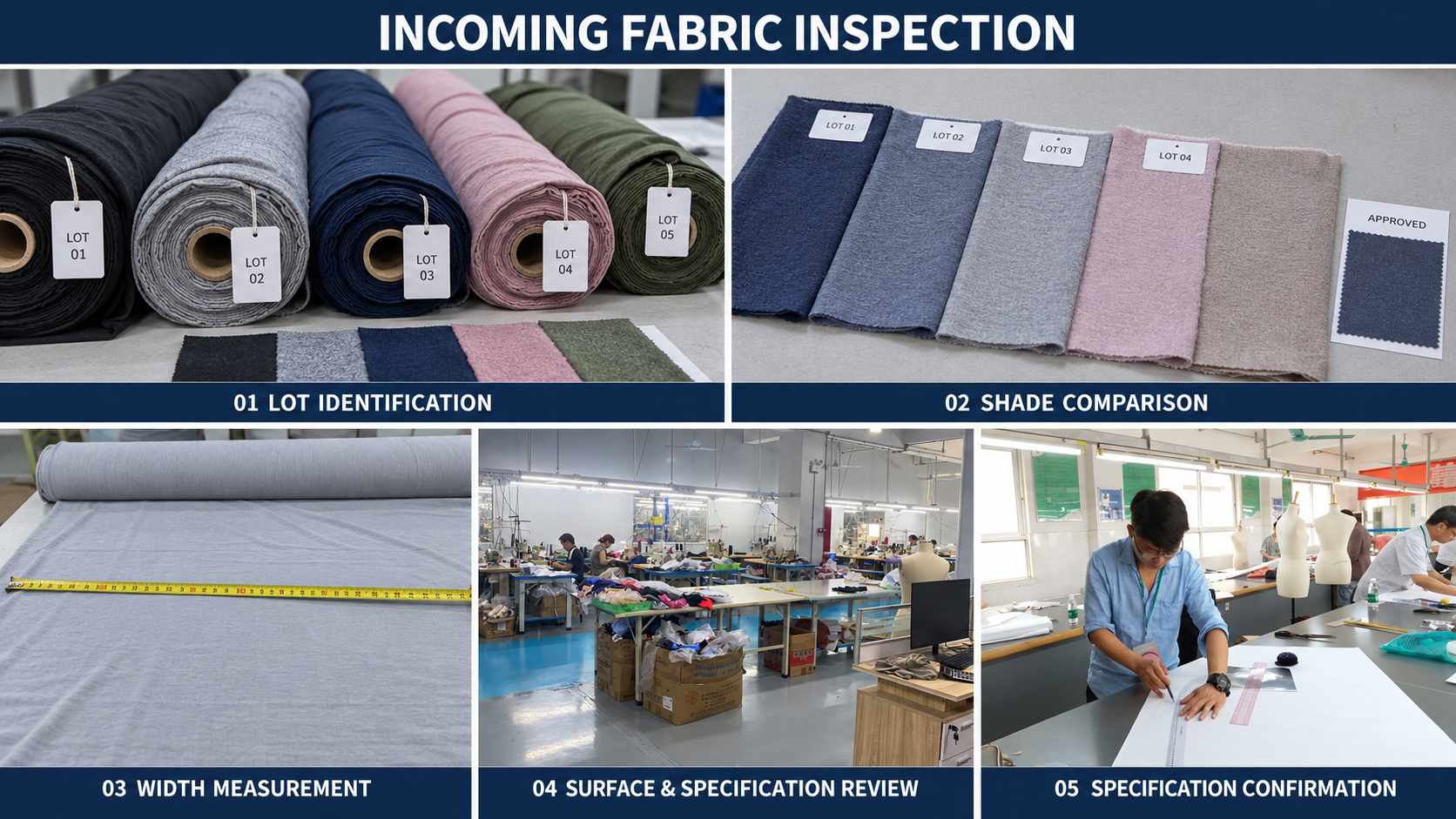 Shade and Color-Lot Control
A color that appears consistent on a small swatch can show variation when viewed across larger garment panels. Fabric lots are therefore considered before cutting, especially for solid-color leggings and repeat wholesale programs.
Approved color references may include a confirmed fabric swatch, sample garment or Pantone requirement. Pantone information helps communicate the intended color, but bulk fabric should still be evaluated against the approved physical reference where one is available.
Panels for the same garment should be cut from compatible fabric lots. Shade control is particularly important around waistbands, pockets and gussets because adjacent components can reveal differences clearly.
Pattern and Cutting Preparation
Production patterns are reviewed against the approved sample, size chart and garment construction. Relevant components may include front and back leg panels, waistbands, gussets, pocket pieces and additional support panels.
Fabric direction must be considered when arranging the pattern. Incorrect orientation can change stretch, recovery, drape or surface appearance. This is especially important for performance fabrics, brushed materials and PU stretch constructions.
Before cutting begins, the team confirms the required size range, quantity by size and color, pattern version and applicable allowances. Modified patterns should not be released for bulk cutting until the related sample and measurements have been approved.
Spreading and Cutting Control
Fabric is prepared and spread according to its behavior and production requirements. Excessive tension during spreading can affect panel dimensions after the material relaxes. Layers should remain aligned so that cut components are consistent through the stack.
Cutting accuracy influences waist, hip, rise, inseam, waistband height and pocket position. Curved panels, gussets and pocket openings require particular attention because small deviations can affect sewing alignment and finished fit.
Cut components are checked against the approved pattern before they are grouped for production.
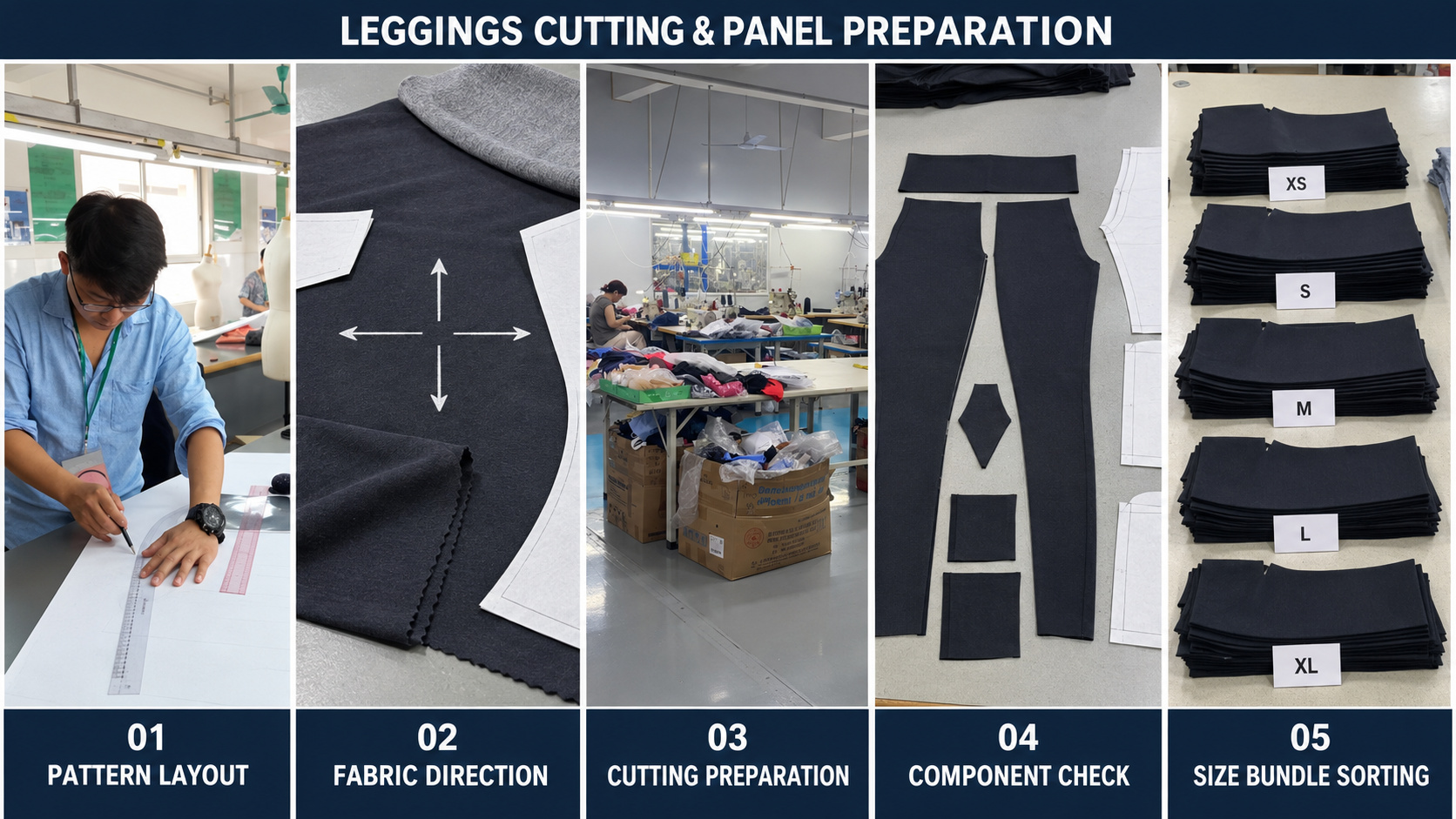 Cut-Panel Identification and Bundling
After cutting, garment components are identified and grouped by style, color and size. Waistband, pocket, gusset and body panels need to remain correctly matched before moving to the sewing line.
Panel checks may cover shape, dimensions, notches, quantity and visible material defects. Incorrect or damaged components should be separated before sewing rather than corrected after assembly.
The prepared bundles then move into the Sewing & Stitching Process, where equipment and seam construction are selected according to the approved garment specification.
Information Buyers Should Confirm
For accurate material preparation and cutting, buyers should provide the fabric composition, preferred GSM, color reference, size chart, measurement tolerances, garment construction and quantity by size and color.
The approved sample and final specification become the references for panel preparation and subsequent production checks. Overall production sequencing is explained on our Leggings Production Process page.
Fabric requirements that may affect MOQ or lead time—such as custom dyeing, special finishes or low-volume color lots—should be reviewed before sampling and bulk-order confirmation.