


Production Begins with an Approved Specification
Tervoniq uses the approved sample and confirmed production specification as the main references for OEM, private-label and wholesale leggings orders. Before production begins, we confirm the fabric, size chart, measurement tolerances, garment construction, colors, logo application, labels, packaging and order quantity by size and color.
The production route may vary between sports leggings, pocket leggings, biker shorts, maternity leggings, fleece-lined styles and PU or faux leather leggings. Fabric behavior, waistband structure, pocket construction and branding requirements all affect processing time and quality-control priorities.
A clear specification helps prevent avoidable differences between the approved sample and bulk garments.
Step 1: Material and Production Preparation
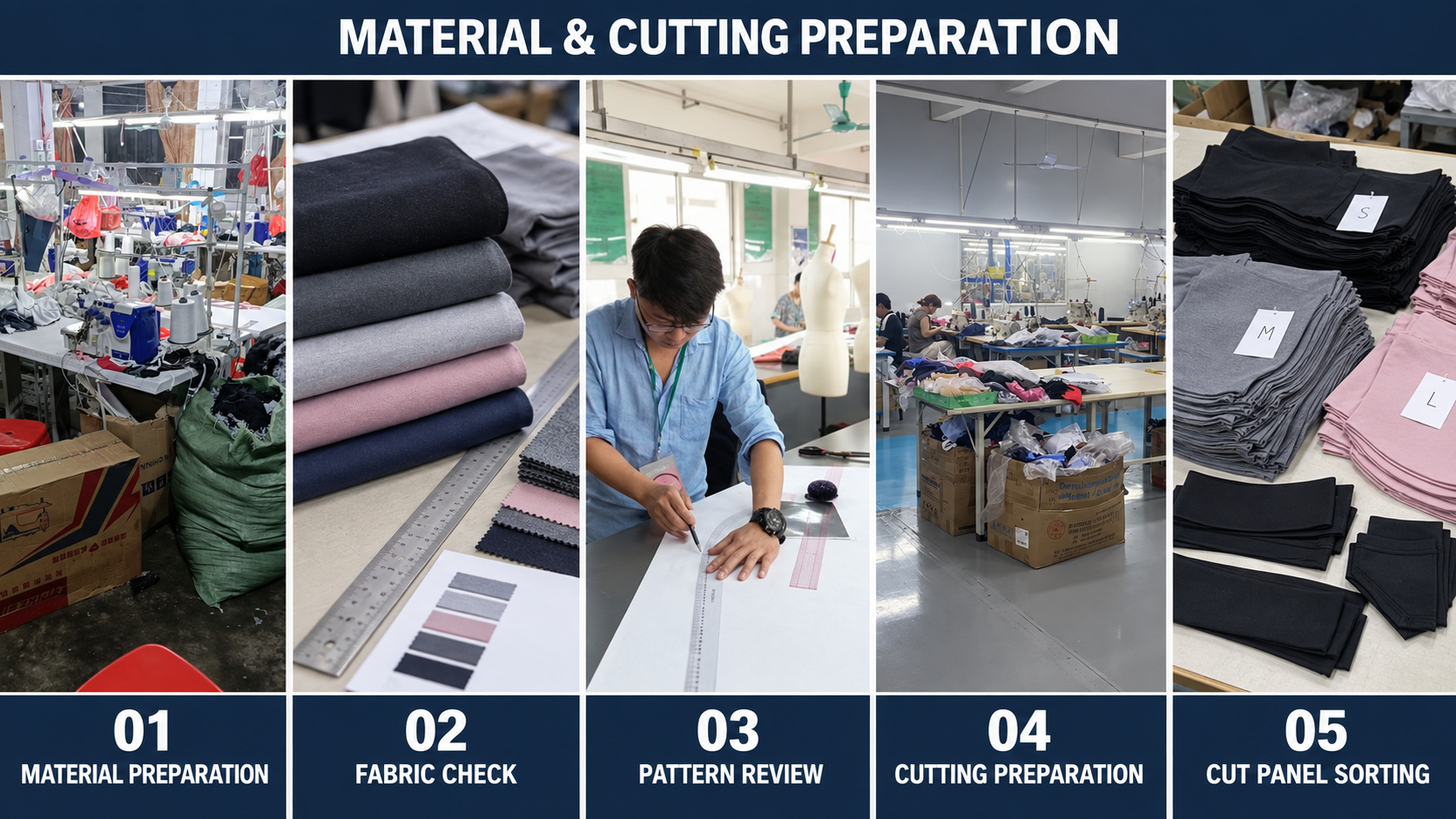
Required fabric, sewing threads, elastic components, labels and packaging materials are prepared according to the approved order details. Incoming fabric is reviewed for visible defects, width, shade consistency and applicable specification requirements.
Stretch fabrics are also considered in terms of composition, GSM, stretch direction, recovery, hand feel and opacity where relevant. Fabric lots and shades should be controlled before cutting to reduce visible color differences within the same order.
Custom-dyed material, special finishes or buyer-specified trims may require additional sourcing and approval time.
Step 2: Pattern Review, Spreading and Cutting
Production patterns are checked against the approved size chart and garment construction. Fabric is spread with attention to stretch direction, surface condition and shade lot before cutting.
Cut panels for the body, waistband, gusset and pockets are identified and grouped by size and color. Accurate panel dimensions are important because cutting differences can affect waist, hip, rise, inseam and pocket alignment after sewing.
More information about these controls is available on our Fabric Inspection & Cutting page.
 Step 3: Stretch-Garment Sewing
Cut components move to the assigned sewing line according to the approved construction. Overlock, flatlock, coverstitch, lockstitch and bartack equipment may be used depending on the seam position and product design.
Sewing operations can include body-panel joining, gusset assembly, waistband construction, pocket attachment, inseam closing and hemming. Inline checks focus on stitch formation, seam alignment, skipped stitches, waistband joining, pocket position and garment stress points.
Sports leggings may require flat seams and stable pocket openings. Maternity styles need consistent belly-panel construction, while fleece-lined and PU materials require handling suited to their thickness and surface characteristics. The relevant operations are explained further on the Sewing & Stitching Process page.
Step 4: Finishing and Measurement Checks
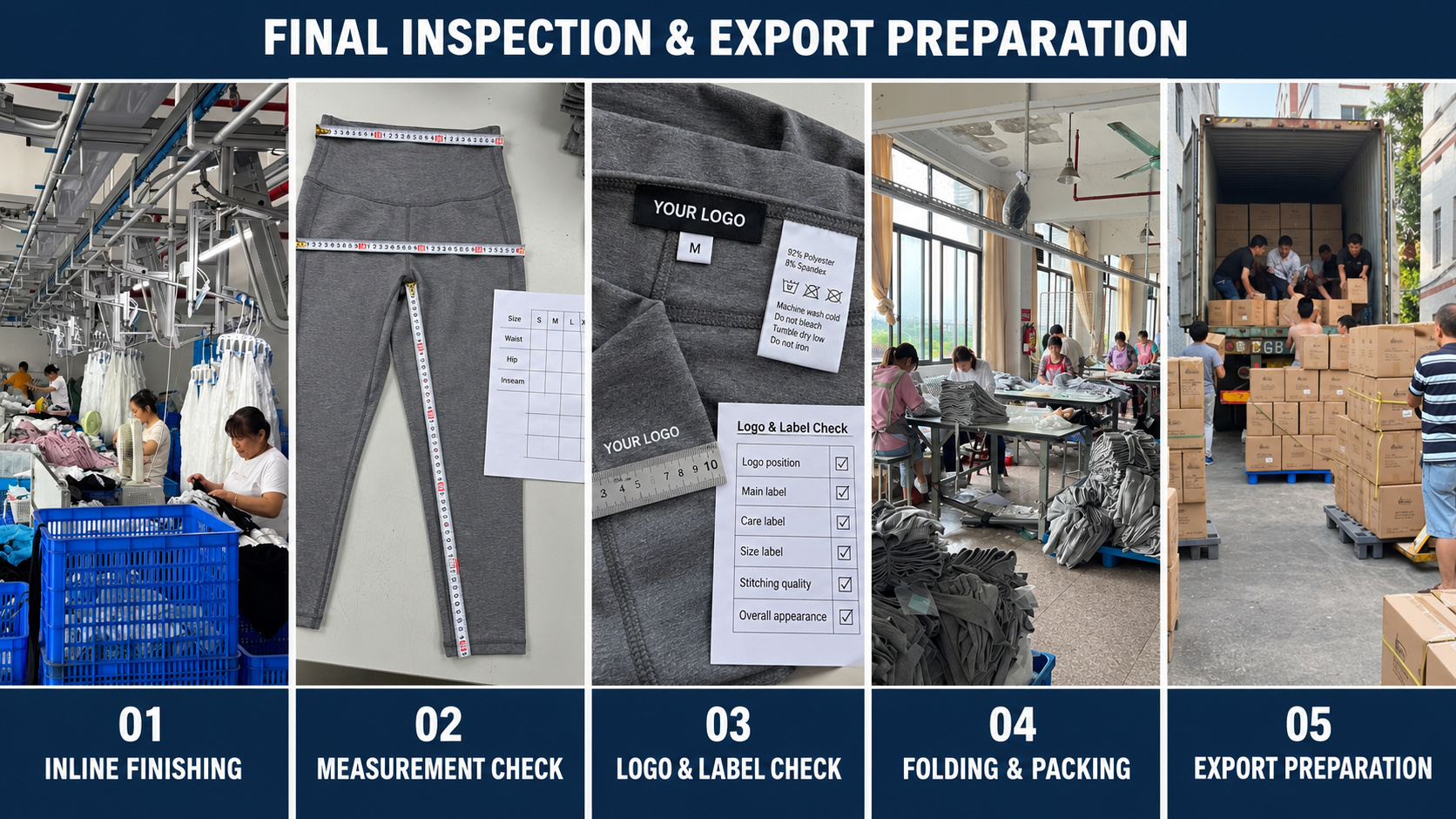
After sewing, garments proceed through thread trimming, finishing and initial appearance review. Measurements are checked against the approved specification and agreed tolerances.
Common checkpoints include waist, hip, rise, inseam, total length, waistband height and pocket dimensions. Inspectors also review seam condition, garment symmetry, surface appearance and logo placement. Stretch, recovery and opacity or squat-proof performance are checked where applicable to the selected style.
These checks are based on the product requirements rather than applying the same test standard to every leggings program.
Step 5: Final Inspection and Packing
Finished garments are compared with the approved sample and order specification. Inspection can cover measurements, workmanship, color, waistband stability, pockets, logo application, labels, barcodes and overall appearance.
Approved leggings are folded and packed according to the confirmed packing instructions. Options may include standard or printed polybags, size stickers, hangtags, retail boxes, master cartons and customized shipping marks.
The complete inspection scope is outlined on our Final Inspection & Quality Control page.
 Step 6: Export Preparation and Lead Time
Before shipment, carton quantities, size assortments, labels, barcodes, packing materials and shipping marks are verified. Buyer-appointed or third-party inspection can be coordinated when required.
Standard bulk production is typically around 25–35 days after sample and order approval. Custom-dyed fabrics, complex construction or special packaging may extend the schedule to approximately 35–45 days.
For production planning, buyers should provide the style or tech pack, quantity by color and size, fabric requirements, branding details, packaging, destination and target delivery date. Export packing and shipment arrangements are covered on our Packing & Export Preparation page.